
Ear, Nose & Body
Piercings in Brampton
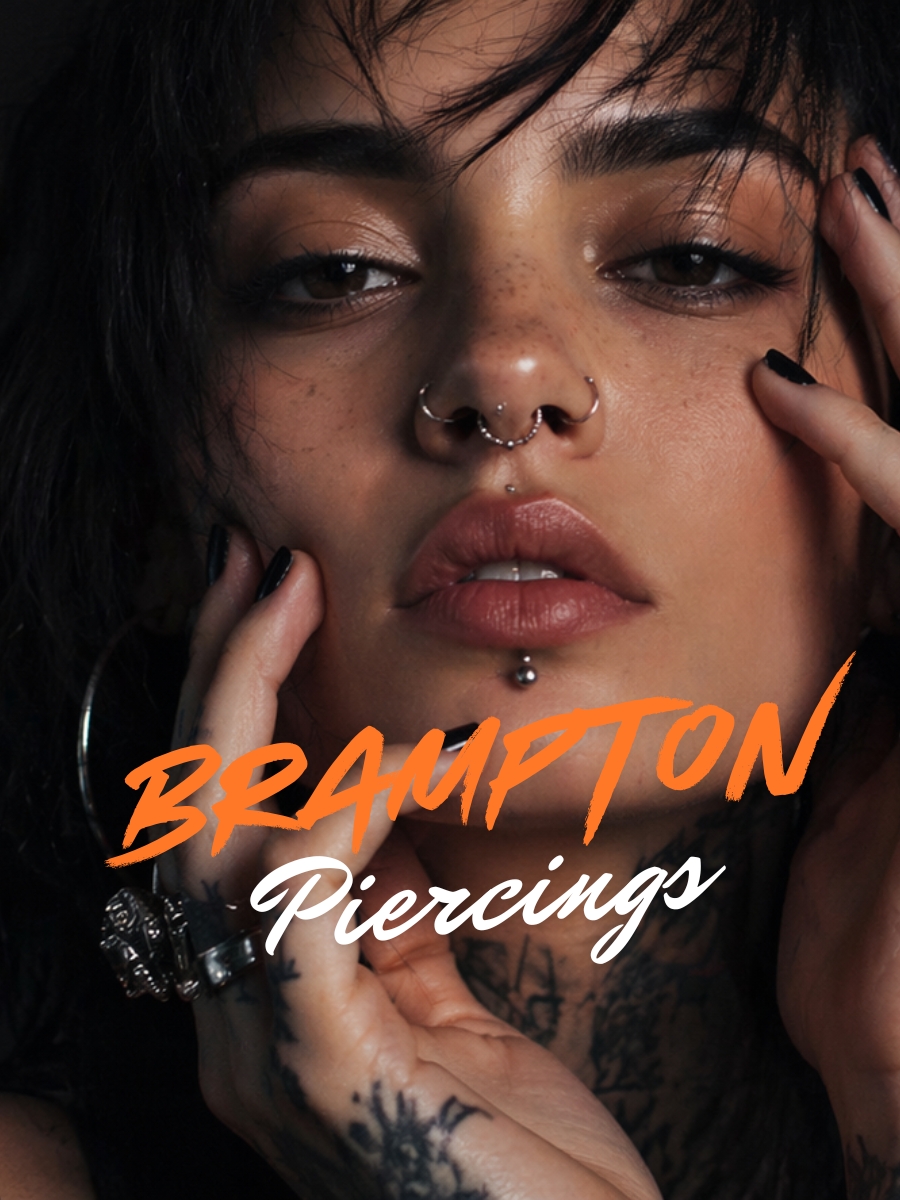
Hardwork Tattoo delivers professional piercing services in Brampton with a focus on precision, hygiene, and long-term results. Each piercing is performed using sterile, single-use needles that reduce tissue damage and support faster healing.
The studio offers the full range of piercings, including ear, nose, lip and facial, body, and intimate placements, with jewellery selected based on anatomy and style. Implant-grade titanium and solid gold are used as standards to ensure safety and comfort.
Walk-ins are available for most ear and nose piercings, while body and intimate services are handled through private consultations. Every piercing is approached as both a technical procedure and a personal decision.
639+
5.0★ Google reviews
100%
Single-use needles
ASTM F136
Implant-grade titanium
5+
Piercing categories
What Is Body Piercing?
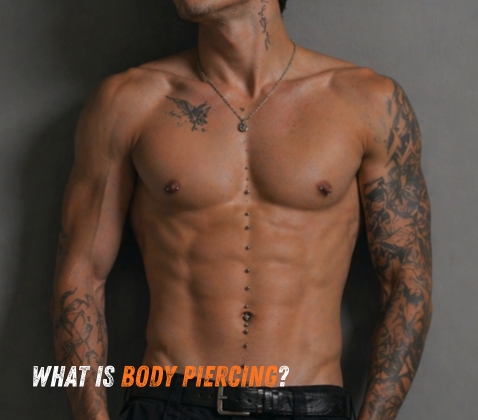
Body piercing is the practice of creating a small opening in the skin or cartilage to insert jewellery for aesthetic, cultural, or personal expression. It goes beyond style. It reflects identity, marks milestones, and allows people to customise their appearance in a way that feels permanent yet adaptable.
Modern body piercing combines precision, hygiene, and artistry. Professional studios use sterile, single-use needles to place jewellery safely into specific anatomical points. This method reduces tissue damage and supports faster healing compared to outdated techniques like piercing guns.
Piercing also carries cultural and historical significance across different societies. From traditional rites of passage to contemporary fashion, it has evolved into a widely accepted form of self-expression. Today, clients choose piercings for multiple reasons, including style enhancement, symmetry, confidence, and individuality.
At Hardwork Tattoo, the focus is not only on placement but also on safety, material quality, and long-term healing. Every piercing is approached as both a technical procedure and a personal decision. Whether you're exploring for the first time or ready for your next piece, understanding the different types of piercings helps you arrive with clarity and confidence.
What Are the Different Types of Piercing?
Piercing is not one-size-fits-all. The right choice depends on body placement, personal style, and how it fits into your daily routine. Options range across five main categories: ear, nose, lip and facial, body, and intimate piercings. Each type varies in appearance, healing time, and maintenance. At Hardwork Tattoo, every placement is guided by both aesthetics and practicality, helping you choose what works long-term.
Ear Piercings
Ear piercings offer the widest range of styles, covering soft lobe tissue to structured cartilage placements. Multiple piercings can be combined into a curated ear or "ear party" look, allowing you to layer jewellery for a personalised aesthetic. Here are the most popular types.
Lobe (Standard)
The most common and least painful ear piercing, placed through the soft, fleshy lower lobe. It heals quickly, typically in 6 to 8 weeks, which makes it ideal for first-timers. It supports studs, hoops, and dangles.
Upper Lobe
The upper lobe sits just above the standard lobe area. This placement allows vertical stacking for a layered look and heals in 6 to 8 weeks. It works well with small studs and hoops.
Helix
The helix is the upper outer rim of the ear made of cartilage. This piercing creates a clean, structured look and heals in 6 to 12 months. It suits studs and small hoops.
Forward Helix
The forward helix is the front section of the ear where the rim meets the face. This placement is compact and subtle, healing in 6 to 9 months. It pairs best with flat-back studs.
Daith
The daith is the inner cartilage fold just above the ear canal. This piercing requires precise placement and heals in 6 to 9 months. It is commonly styled with clicker rings.
Tragus
The tragus is the small cartilage flap that partially covers the ear canal. This piercing offers a compact, modern look and heals in 6 to 12 months. It works best with small studs.
Anti-Tragus
The anti-tragus is the raised cartilage opposite the tragus above the lobe. This less common placement creates a bold accent and heals in 6 to 12 months. It depends on individual anatomy.
Rook
The rook is the inner cartilage ridge above the daith. This piercing has a deeper placement and uses curved barbells. A rook piercing usually takes 6 to 12 months to heal.
Conch
The conch is the large, flat cartilage area in the centre of the ear. This piercing supports both studs and hoops that wrap the ear. It takes 6 to 12 months to heal a conch piercing.
Industrial (Scaffold)
The industrial connects two cartilage points across the upper ear. This piercing uses a straight barbell and creates a bold, linear look. The healing of an industrial piercing takes 6 to 12 months.
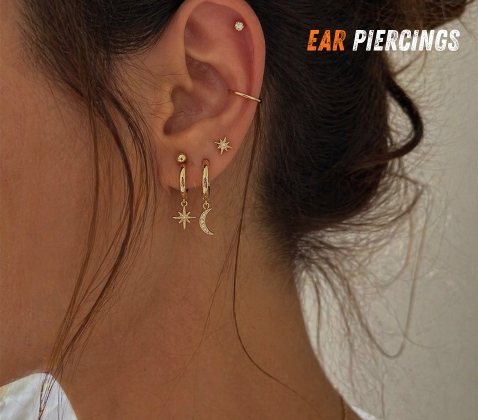
Not sure where to start? Our piercers can map out a curated ear plan during your consultation. Ear piercings define the upper frame of your face. The next area to explore is the nose, which offers equally diverse placement options.
Nose Piercings
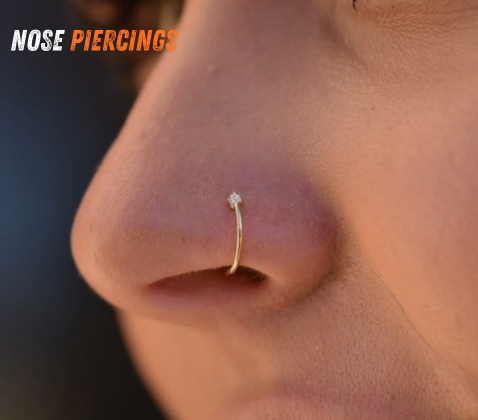
Nose piercing is not a single placement. It includes multiple distinct options that sit across different parts of the nose. Each placement creates a different visual effect, and choices vary based on face shape, style, and comfort. Nose piercings are among the most requested services at Hardwork Tattoo.
Nostril (Standard)
The nostril is the soft outer curve of the nose where it flares from the face. This is the most popular nose piercing, placed at the natural crease for a balanced look. It heals in 4 to 6 months and works with studs, hoops, and L-shaped pins.
Nostril (Double)
The nostril area allows two piercings, either on the same side or symmetrically on both sides. This style adds visual layering without being overly bold. Each piercing heals separately and offers flexible jewellery combinations.
Nostril (High Nostril)
The high nostril sits above the standard placement, closer to the nasal bone. This creates a sharper, more elevated look and pairs best with small flat-back studs. Healing can take slightly longer due to thicker tissue.
Septum
The septum is the soft tissue strip (columella) between the nostrils, just below the cartilage. Despite its bold look, it is less painful than expected. It heals in 6 to 8 months and allows jewellery to be flipped inward for discretion.
Bridge
The bridge is the skin area between the eyes across the top of the nose. This is a surface piercing that does not pass through cartilage or bone. It heals in 8 to 10 weeks but requires careful placement to avoid migration.
Austin Bar
The nose tip is the fleshy front section of the nose where this horizontal barbell sits. It creates a symmetrical look across the tip without involving the septum. This is a rare piercing that requires precise technique.
Nasallang
The nasal structure allows a single barbell to pass through both nostrils and the septum simultaneously. This advanced piercing creates a three-point alignment across the nose. It requires expert placement and heals in 4 to 6 months.
Nose piercings for men have become increasingly popular, especially septum and high nostril placements. Style depends on jewellery choice, where subtle studs create a minimal look and rings make a stronger statement. Our piercers work with all clients to customise the result based on individual style and preference.
Lip, Oral, and Facial Piercings
Lip, oral, and facial piercings sit in the most expressive zone of the face. These placements are highly visible, and even small changes in position or jewellery can completely shift how the piercing looks and feels.
Labret
The labret area sits just below the centre of the lower lip, above the chin. This piercing works with flat-back studs for a clean look or rings for a bolder style. It heals in 6 to 8 weeks and suits most face shapes.
Monroe
The Monroe sits above the upper lip on the left side, mimicking a beauty mark. It is worn with a small flat-back stud and creates a subtle, vintage-inspired look. Healing typically takes 6 to 8 weeks.
Medusa (Philtrum)
The philtrum is the vertical groove between the nose and upper lip. This centred piercing creates a symmetrical, structured look and pairs well with septum jewellery. Healing runs 6 to 8 weeks.
Snake Bites
The lower lip allows two symmetrical piercings on either side. These can be styled with studs or hoops for a balanced, edgy look. Each side heals in 6 to 8 weeks.
Angel Bites
The upper lip supports two piercings placed symmetrically above the lip line. This placement frames Cupid's bow and works best with small studs. Healing takes 6 to 8 weeks.
Tongue
The tongue is the central muscle inside the mouth where this vertical piercing sits. It uses a straight barbell and heals quickly in 4 to 6 weeks, but requires strict oral hygiene and care during the initial swelling phase.
Eyebrow / Anti-Eyebrow
The eyebrow sits above the eye ridge, while the anti-eyebrow sits below the outer eye on the cheekbone. Both are surface piercings that use curved barbells and require precise placement to reduce migration risk.
Cheek (Dimple)
The cheek area allows piercings that mimic natural dimples. These pass through thicker tissue and require longer jewellery initially to manage swelling. Healing is more complex, so consultation is recommended.
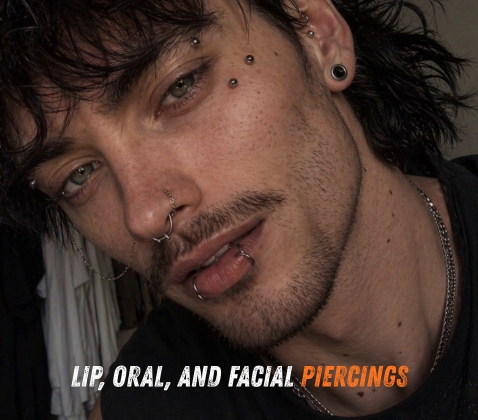
Lip, oral, and facial piercings sit above the waist. The next category moves across the rest of the body, where some of the most requested placements are found.
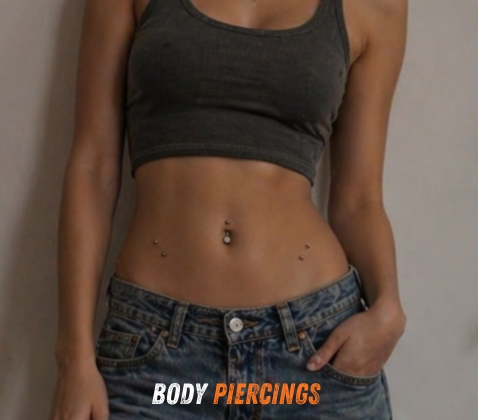
Body Piercings
Body piercings cover the widest range of placements, from the iconic belly button to highly customisable dermal anchors that can sit almost anywhere. This category includes both mainstream choices and more specialised options, depending on anatomy and style preference.
Belly Button (Navel)
The navel is the rim of skin above the belly button opening, most commonly pierced through the upper edge. This piercing uses a curved barbell with a decorative bottom piece that sits inside the navel. Healing takes 6 to 12 months, and tight or high-waisted clothing should be avoided to reduce irritation.
Floating Navel
The navel area supports this variation, where the jewellery sits flatter against the skin rather than dropping into the navel. It is designed for anatomy where a standard navel piercing may not sit correctly. It uses a floating barbell and heals in 6 to 12 months.
Nipple
The nipple sits at the centre of the chest and can be pierced horizontally or vertically. This piercing uses straight or circular barbells and creates a balanced, symmetrical look. Healing takes 9 to 12 months, and breathable, non-abrasive clothing is essential during recovery.
Dermal Anchor
The dermal is a single-point piercing placed under the skin with no exit point. A small anchor sits beneath the surface while the decorative top remains visible. It heals in 1 to 3 months but requires careful placement to reduce migration risk.
Surface Piercing
The surface area allows a bar to pass under the skin with two visible ends on flat sections like the collarbone or neck. This piercing uses a surface bar and creates a structured, symmetrical look. It has a higher rejection risk and requires consistent aftercare.
Body piercings are visible and widely recognised. The final category is more personal, focusing on intimate placements designed for both aesthetics and individual preference.
Intimate Piercings
Intimate piercings are among the most thoughtfully considered placements, chosen for both personal meaning and aesthetics. At Hardwork Tattoo, all intimate piercings are performed in a private room by an experienced piercer. A consultation is always part of the process, as anatomy and placement vary for every individual.
Female-Anatomy Options
VCH (Vertical Clitoral Hood)
The clitoral hood is the fold of skin above the clitoris where this vertical barbell passes through. This is the most popular intimate piercing, valued for both aesthetics and potential sensation. Healing takes 4 to 8 weeks and is generally quicker than most expect.
Christina
The Christina, also called the pubic mound, is the area above the vulva where this surface piercing sits. It is decorative, with a curved barbell or surface jewellery creating a visible accent. Christina takes 6 to 9 months to heal and depends on anatomy due to a higher rejection risk.
HCH (Horizontal Clitoral Hood)
The clitoral hood supports a horizontal placement across the tissue rather than through it. This piercing is more aesthetic-focused and sits above the clitoris. Healing takes 4 to 8 weeks.
Fourchette
The rear edge of the vaginal opening is where this vertical piercing is placed. It is less common and requires specific anatomy for safe placement. Healing typically takes 6 to 8 weeks.
Triangle
The tissue beneath the clitoral shaft allows this horizontal piercing to pass under rather than through the hood. It is technically complex and requires expert placement. Healing takes 6 to 9 months.
Male-Anatomy Options
Prince Albert (PA)
The urethral opening and underside of the glans define this placement, where a ring or curved barbell passes through. It is the most well-known male intimate piercing and heals relatively quickly in 4 to 8 weeks. It is commonly requested and requires a private consultation.
Reverse Prince Albert
The upper glans is where this variation enters instead of the underside. It is less common and requires precise alignment. Healing takes 4 to 8 weeks.
Frenum
The underside of the penile shaft is where this horizontal barbell sits. It can be done as a single piercing or in multiple placements along the shaft. Healing takes 4 to 8 weeks per piercing.
Dydoe
The ridge of the glans supports this placement, usually done in pairs. It creates a symmetrical look but requires suitable anatomy. Healing takes 4 to 6 months.
Guiche
The perineum, between the scrotum and anus, is where this piercing sits. It uses a curved barbell and is less common. Healing takes 3 to 6 months.
Ampallang
The glans allows a horizontal barbell to pass through from side to side. This is one of the most complex intimate piercings and requires an experienced piercer. Healing takes 6 to 12 months.
All intimate piercings at Hardwork Tattoo are performed by appointment in a fully private setting. Whether you came in knowing exactly what you want or just started exploring, our piercers in Brampton are here to help you narrow it down. Walk-ins are welcome for most ear and nose piercings, or book ahead for body and intimate placements.
How Does a Professional Needle Piercing Actually Work?
A professional needle piercing uses a single-use, hollow needle to create a clean, precise opening that supports faster healing and less trauma. Unlike piercing guns, the needle does not tear the skin. It makes a controlled incision that displaces tissue, which helps the body recover more efficiently.
01
Consultation and Placement Planning
The process starts with a discussion about placement, anatomy, and jewellery choice. The piercer marks the exact position to ensure symmetry and alignment.
02
Cleaning and Skin Preparation
The area is disinfected using medical-grade antiseptic. This step removes surface bacteria and prepares the skin for a safe procedure.
03
Sterilisation and Needle Setup
Single-use, sterile needles are opened in front of you. Professional studios follow strict cross-contamination protocols, including gloves and sterilised tools.
04
The Piercing Process
The needle passes cleanly through the skin, creating a precise channel for jewellery insertion. The process is quick, controlled, and far less traumatic than blunt-force methods.
05
Jewellery Insertion and Securing
Implant-grade jewellery is inserted immediately after the piercing. The piece is secured to prevent movement and support proper healing.
06
Aftercare Guidance
You receive clear aftercare instructions based on the placement, including cleaning, moisturising, and healing timelines.
The Technology Behind the Needle
Modern piercing needles are tri-bevelled, designed for accuracy and minimal damage. The tip punctures the skin, the cutting edge creates a smooth crescent-shaped incision, and the final bevel gently expands it into a round opening that matches the jewellery size. This process avoids tearing and reduces swelling.
Why Needle Piercing Is Safer Than Gun Piercing?
Needle piercing uses a sharp, hollow needle that removes a small amount of tissue cleanly. Piercing guns use force to push jewellery through the skin, which can cause blunt trauma, increased swelling, and a higher infection risk. Needles offer better precision, hygiene, and healing outcomes, making them the industry standard for professional studios.
What Are The Different Types Of Piercing Jewellery?
The right piercing jewellery supports healing, prevents irritation, and defines the final look of your piercing. Material quality matters most during the initial healing phase, while style becomes more flexible once the piercing has settled.
Hypoallergenic
Implant-Grade Titanium
ASTM F136 Certified · Studio standard
The safest choice for fresh piercings. Nickel-free, lightweight, and fully biocompatible. Available in anodised colours without dyes or coatings.
Hypoallergenic
14k / 18k Solid Gold
Must be solid — never plated
Premium upgrade option for healed piercings. Durable, skin-safe, and classic. Available in yellow, white, and rose gold.
Mostly safe
Implant-Grade Steel
ASTM F138 Certified
Widely used for healed piercings. Contains trace nickel — not recommended if you have a known nickel sensitivity or allergy.
Hypoallergenic
Niobium
Anodisable for colour options
Nickel-free alternative to steel. Can be anodised into a wide range of colours without dyes, making it ideal for colour-conscious clients with sensitivity.
Hypoallergenic
PTFE / Bio-Flex
Flexible polymer material
A soft, flexible option for piercings that move with the body. Reduces pressure, irritation, and migration risk — ideal for navel and surface placements.
Flat-Back Labret Studs
Flat disc sits flush against the skin — no pressure, no snagging. Ideal for ear, lip, and cartilage piercings during healing and after.
Captive Bead Rings (CBR)
Circular ring held closed by a small bead under tension. Versatile for septum, daith, helix, and nipple piercings.
Seamless Rings
Minimal continuous look with no visible closure point. Popular for nostril, helix, and daith placements where a clean profile matters.
Straight & Curved Barbells
Straight bars for tongue and industrial piercings; curved for eyebrow, rook, and navel. Ball or decorative ends secure each side.
Threadless (Push-Fit) Jewellery
The top flexes and locks into the post — no threading needed. Easy to change, very secure, and won't unscrew over time. Preferred for healing piercings.
Flat-back and threadless jewellery are preferred for healing piercings due to reduced movement and irritation.
How Long Do Piercings Take to Heal?
Piercing healing time depends on blood flow, movement, and aftercare. Soft tissue areas heal faster, while cartilage and complex placements take longer due to reduced circulation.
| Piercing | Placement Zone | Avg. Healing Time |
|---|---|---|
| Ear Lobe | Soft tissue | 6 to 8 weeks |
| Helix / Cartilage | Upper ear cartilage | 6 to 12 months |
| Daith | Inner ear fold | 6 to 9 months |
| Tragus | Cartilage nub | 6 to 12 months |
| Rook | Anti-helix cartilage | 6 to 12 months |
| Nostril | Side of nose | 4 to 6 months |
| Septum | Nasal septum | 6 to 8 months |
| Lip / Labret | Lip tissue | 6 to 8 weeks |
| Tongue | Tongue muscle | 4 to 6 weeks |
| Belly Button / Navel | Navel rim | 6 to 12 months |
| Nipple | Areola base | 9 to 12 months |
| Dermal Anchor | Flat skin surface | 1 to 3 months |
| VCH | Clitoral hood | 4 to 8 weeks |
| Christina | Pubic mound | 6 to 9 months |
| Prince Albert | Glans / urethra | 4 to 8 weeks |
Pain is brief and controlled, while healing is gradual and requires consistent care. Proper aftercare reduces discomfort and supports faster recovery.
How Much Does Piercing Cost in Brampton?
All prices include sterile, single-use needles and implant-grade titanium starter jewellery. Final cost varies with jewellery upgrades or custom placements.
Ear
Ear Lobe
From
$30
· $50 pair
Soft tissue, heals in 6–8 weeks. Most popular first piercing.
Most Booked
Ear
Helix / Cartilage
From
$40
Upper ear cartilage. Heals in 6–12 months.
Ear
Tragus / Rook / Daith
From
$50
Cartilage fold placements, private consultation recommended.
Nose
Nostril
From
$50
Standard side-of-nose placement. Heals in 4–6 months.
Nose
Septum
From
$60
Central nasal placement with clicker or horseshoe jewellery.
Lip & Facial
Lip / Labret / Monroe
From
$50
Thin tissue, quick heal. Flat-back stud jewellery included.
Body
Navel
From
$50
Anatomy-dependent placement. Heals in 6–12 months.
Body
Nipple
From
$50
· $90 pair
Single placement. Breathable clothing advised during healing.
Specialty
Microdermal / Surface
From
$80
Surface anchor placement. Consultation required.
Prices reflect the use of sterile, single-use needles and implant-grade titanium jewellery. Final pricing may vary based on jewellery upgrades, anatomy, or custom placements. A quick consultation at the studio ensures accurate recommendations and cost clarity before the procedure.
Why Should You Choose Hardwork Tattoo for Piercing in Brampton?
Hardwork Tattoo delivers safe, precise, and professional piercings backed by strict hygiene standards and experienced artists. Every service is designed to ensure comfort, proper healing, and long-term results.
✓
Work with certified piercers trained in needle-only techniques and cross-contamination prevention protocols
✓
Use implant-grade jewellery only, including ASTM-certified titanium, solid gold, and implant-grade steel
✓
Operate in a private studio environment with clean, dedicated rooms for all piercing types, including intimate placements
✓
Provide aftercare support with clear instructions and follow-up guidance for every client
✓
Offer walk-in flexibility for most ear and nose piercings without long wait times
✓
Maintain strong client trust through consistent 5-star reviews and repeat customers
Each piercing follows a controlled, sterile process using single-use needles and professional-grade equipment. Jewellery is selected based on both safety and suitability for your specific anatomy. The focus is not just on the procedure, but on the full experience, from consultation to aftercare.
Get pierced in Brampton
by someone who actually cares.
Walk in for ears and nose. Book ahead for body and intimate. Either way — we'll talk placement, anatomy, and aftercare before the needle touches skin.