
Japanese Tattoo Guide: Styles, Irezumi, Meanings & Motifs
Japanese tattooing remains one of the most structured, visually distinctive, and culturally layered tattoo traditions in the world. Traditional Japanese tattoo art developed through centuries of symbolism, body mapping, folklore, and technical discipline. Every motif, seasonal element, background pattern, and placement convention carries deliberate meaning within the larger composition.
This guide explores the meaning of Irezumi, the history of traditional Japanese tattooing, major Japanese tattoo styles, traditional composition rules, symbolic motifs, floral elements, placement traditions, and artist selection principles. The article explains how Japanese tattoo compositions differ from Western tattoo approaches through body flow, narrative structure, and symbolic consistency.
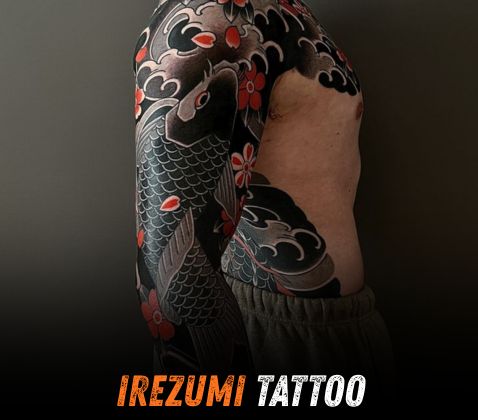
Irezumi refers to the traditional Japanese practice of decorative tattooing. The term carries artistic, historical, and cultural significance shaped by centuries of changing social attitudes in Japan. Irezumi has represented punishment, protection, working-class identity, personal devotion, and organised crime associations across different historical periods.
The sections below break down traditional Japanese tattoo meanings, compositional principles, placement systems, and symbolic motifs, including dragons, koi fish, oni masks, samurai, cherry blossoms, peonies, and lotus flowers. The guide also explains how to approach Japanese tattooing respectfully and how to choose the right Japanese-style tattoo artist.
What Is the Meaning of Japanese Tattoo (Irezumi)?
Irezumi literally translates to “inserting ink.” The term combines ire, meaning “to insert,” and sumi, meaning “ink” or “soot.” Another common character variation, 刺青, translates more closely to “piercing blue-black,” referencing the dark indigo-black tones traditionally associated with Japanese tattoo pigments.
Irezumi functions as more than decorative body art. Traditional Japanese tattooing operates as a symbolic visual system where every motif carries an established cultural meaning. Dragons represent wisdom and protection, koi represent perseverance, cherry blossoms represent impermanence, and peonies represent prosperity and bravery. Traditional compositions treat the body as a connected canvas rather than a collection of isolated images.
Irezumi carries a historically dual meaning within Japanese society. During certain periods, tattoos marked criminals through the bokukei punishment system. During the Edo period, labourers, firemen, and craftsmen adopted full-body tattoos as symbols of identity, protection, endurance, and pride. Later, organised crime groups such as the yakuza became heavily associated with full-body Irezumi. Contemporary Irezumi now holds global recognition as a respected fine art tradition while remaining socially complicated within Japan itself. Understanding Japanese tattoo meaning requires understanding the historical forces that shaped the art form across centuries.
History of Traditional Japanese Tattoos
Japanese tattooing traces back to the Jōmon period (10,000-300 BCE), where clay figurines featuring facial and body markings suggest tattooing existed in some early ritual or symbolic form. Chinese historical texts written during the Kofun period (300-600 CE) described Japanese men with facial and body tattoos. As Chinese political and cultural influence expanded, tattooing gradually shifted from spiritual or decorative use toward criminal punishment. The bokukei system marked offenders with visible tattoos across the forehead or arms, creating a strong social stigma around tattooing for centuries. The Edo period (1603-1868) transformed Japanese tattooing dramatically. Woodblock printing (ukiyo-e) became widely popular, especially the dramatic compositions created by artists such as Utagawa Kuniyoshi, a Japanese ukiyo-e artist. Bold outlines, dynamic movement, dramatic contrast, and mythological storytelling from woodblock art became the visual foundation of traditional Irezumi. Firemen, craftsmen, labourers, and working-class groups adopted full-body tattoos as marks of resilience and identity. The Meiji government banned tattoos in 1868 to project a modernised image toward Western nations, pushing tattooing underground and strengthening its association with organised crime. The ban ended in 1948 during the American occupation.
What Are the Different Japanese Tattoo Styles?
Japanese tattooing includes several distinct stylistic and technical traditions rather than one singular approach. Traditional Japanese tattoo styles differ in technique, compositional rules, and relationship to historical practice.
Irezumi
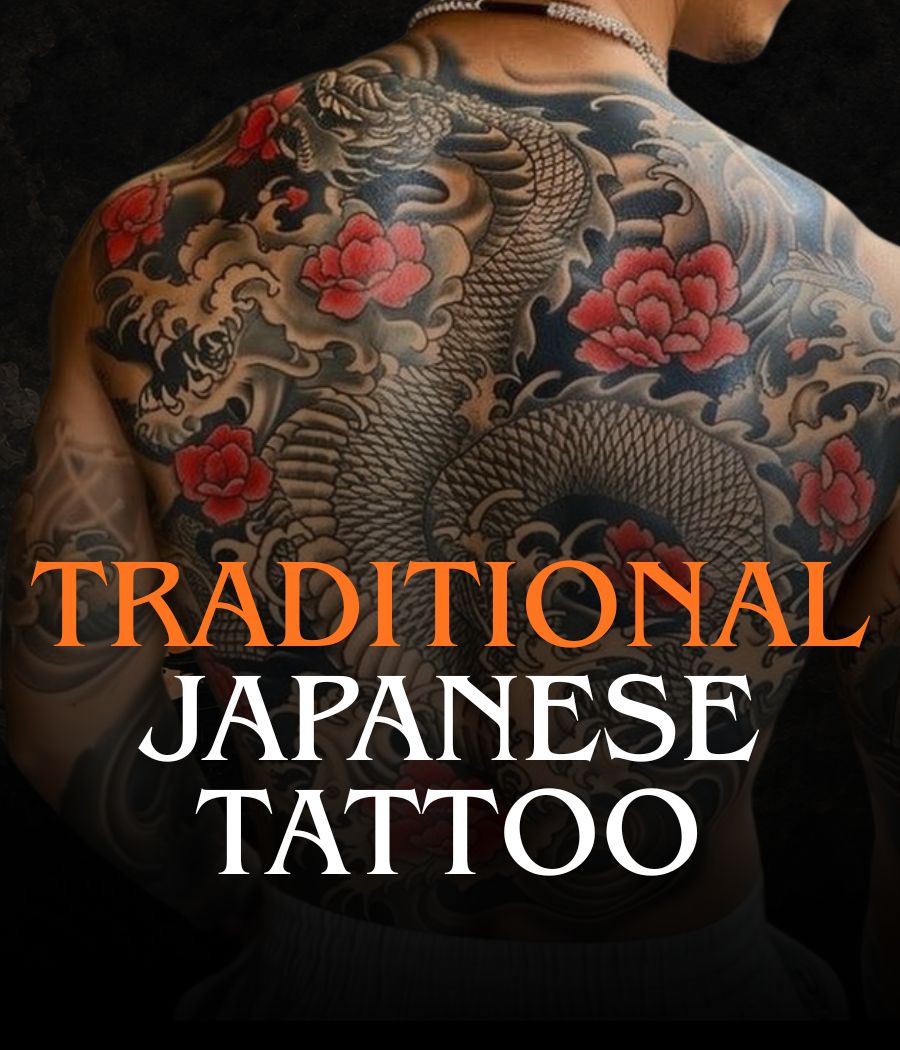
Irezumi represents the foundational Japanese tattoo tradition and functions as a complete compositional system rather than a standalone visual style. Traditional Irezumi compositions use bold black outlines, flat colour saturation, dramatic contrast, flowing negative space, wind bars, waves, clouds, and body-mapped design structure. Traditional Irezumi motifs draw heavily from Japanese mythology, folklore, religion, and nature. Dragons, koi fish, oni masks, samurai, phoenixes, peonies, maple leaves, snakes, and cherry blossoms all carry established symbolic meanings. Motifs never appear randomly within traditional compositions.
Irezumi traditionally focuses on large-scale connected compositions such as full back pieces, chest panels, and full sleeves. Small, isolated designs generally fall outside traditional Irezumi structure.
Wabori
Wabori translates to “Japanese-style carving” or “Japanese-style engraving.” The term describes traditional Japanese tattoo aesthetics executed with modern tattoo machines rather than hand tools. Wabori maintains the same visual characteristics associated with classical Irezumi, including bold line work, flat saturation, traditional motifs, clouds, waves, and body-flow composition. The major difference involves the execution method rather than the aesthetics. Many contemporary Japanese-style tattoo artists working internationally technically practice Wabori rather than classical Tebori.
Tebori
Tebori means “hand carving” and refers to the traditional Japanese hand-poke tattooing technique. Artists use a wooden or metal rod fitted with needles dipped repeatedly into ink before manually inserting pigment into the skin. Tebori produces softer gradients, deeper ink diffusion, and distinct colour texture under the skin compared to machine tattooing. Many clients describe Tebori pain as deeper pressure rather than surface scratching. Tebori remains slower and significantly rarer than machine tattooing. Authentic Tebori masters remain uncommon outside Japan. Many traditionalists consider Tebori the closest surviving connection to historical Irezumi practice.
Traditional Japanese Tattoo Rules and Principles
Traditional Japanese tattooing follows compositional rules developed across centuries of artistic practice. Traditional Irezumi artists generally treat these principles as foundational conventions rather than optional stylistic preferences.
Every major motif in Japanese tattooing connects to a specific season. Traditional compositions maintain seasonal coherence across all supporting elements. Cherry blossoms represent spring. Chrysanthemums and maple leaves represent autumn. Peonies align with spring and summer. Snow imagery and bare branches align with winter. Traditional Irezumi avoids mixing conflicting seasonal elements within the same composition. Pairing cherry blossoms with autumn maple leaves within one traditional panel is generally considered compositionally incorrect.
Japanese tattoo motifs follow long-established pairing traditions. Certain symbols naturally complement one another both visually and symbolically. Traditional pairings include dragon with clouds or water, koi with waves, tiger with bamboo or wind, snake with peonies, and phoenix with paulownia trees. Traditional Irezumi rarely places dragon and tiger motifs within the same panel because they function symbolically as rivals. Traditional artists instead place them on opposing sides of the body.
Japanese tattoo motifs connect directly to Shinto, Buddhist, mythological, and feudal cultural traditions. Oni masks, hannya masks, deity figures, and sacred imagery carry symbolic meaning beyond visual aesthetics. Non-Japanese clients approaching Irezumi respectfully usually research motif meanings, seasonal rules, and cultural symbolism before beginning the tattoo process.
Japanese tattooing exists within a nuanced cultural appropriation discussion. Perspectives differ between traditional Japanese tattoo masters, contemporary Japanese artists, and international practitioners. Many respected artists, including Horiyoshi III, publicly support respectful cross-cultural participation in Irezumi when clients approach the tradition with knowledge, respect, and proper attribution. Traditional artists generally criticise culturally uninformed use of sacred motifs, inaccurate marketing of machine work as Tebori, and superficial imitation disconnected from traditional composition principles.
Visible tattoos remain heavily stigmatised across many parts of Japanese society despite global recognition of Irezumi as fine art. Many onsen, gyms, public pools, beaches, and hotels continue enforcing strict no-tattoo policies due to longstanding associations between tattoos and the yakuza. A 2020 Japanese Supreme Court ruling confirmed that tattooing without a medical licence is legal in Japan. Social stigma surrounding visible tattoos still persists independently of legality.
What Are the Different Placements for Japanese Tattoos?
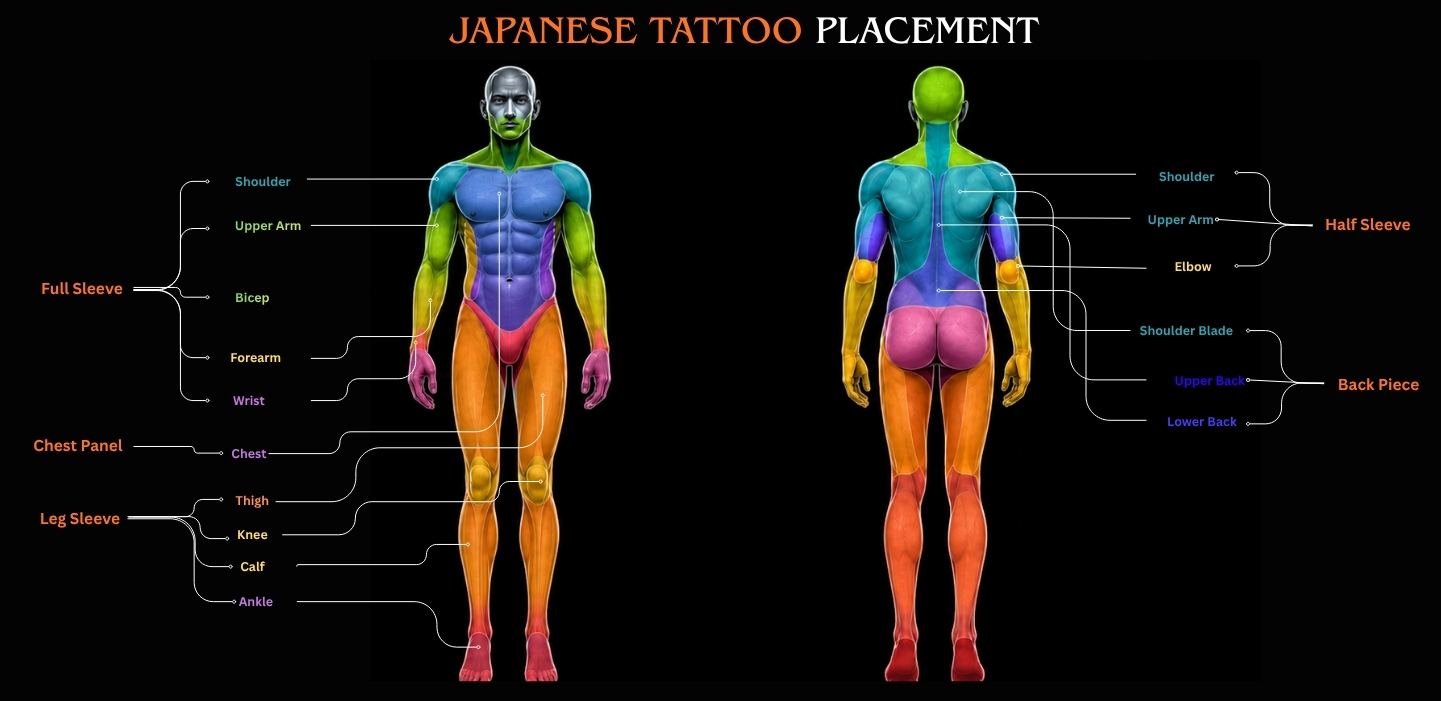
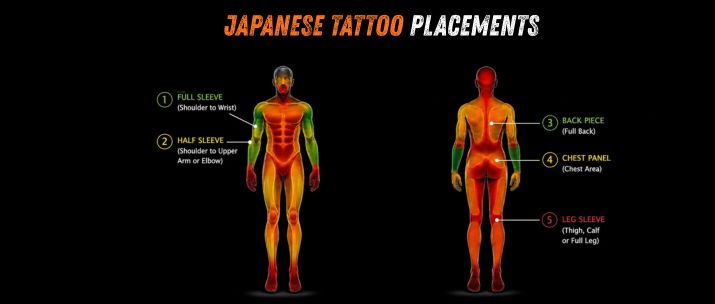
Traditional Japanese tattooing follows a body-mapping philosophy where placement supports overall composition flow. Irezumi treats the body as one connected canvas rather than separate, isolated sections.
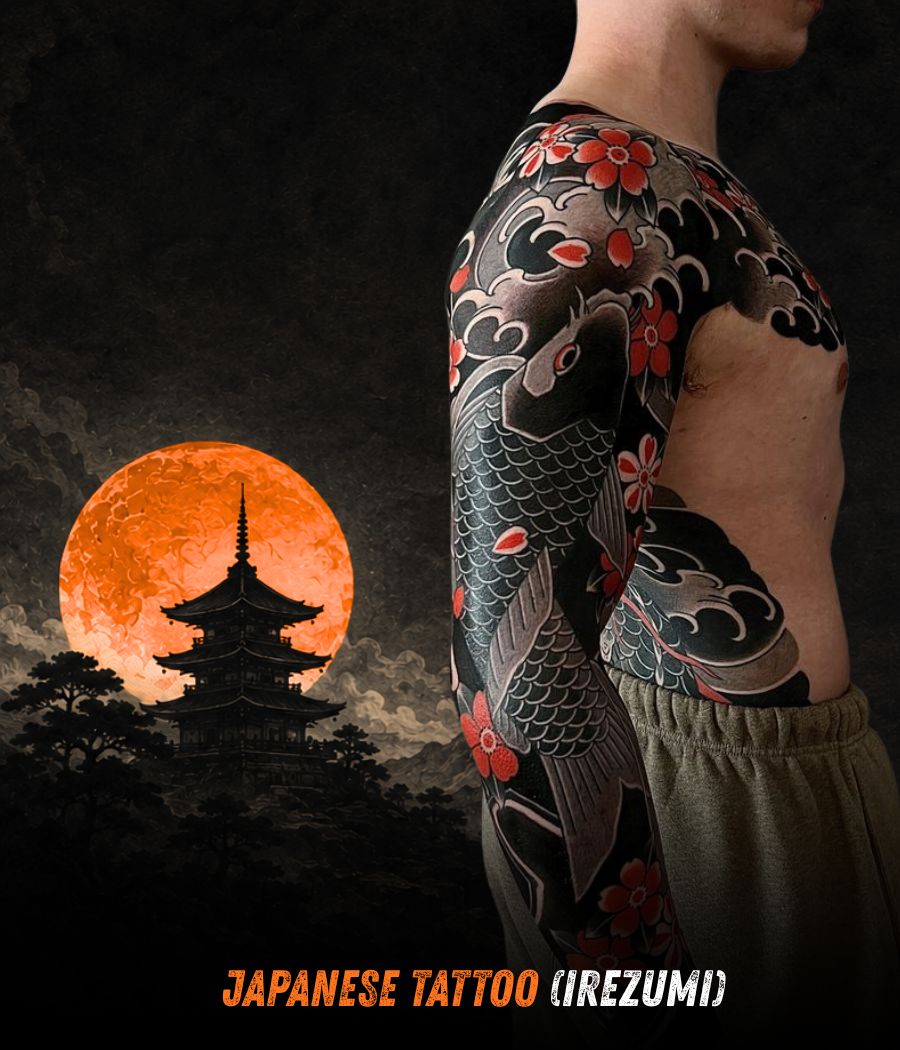
Full sleeve Japanese tattoos cover the arm from shoulder to wrist and sometimes extend partially into the chest or shoulder panel. The sleeve remains one of the most popular Japanese tattoo compositions internationally because the arm provides strong natural flow for dragons, koi, snakes, waves, and floral elements. Traditional sleeve compositions wrap organically with the cylindrical shape of the arm. Clouds, wind bars, and water elements connect major motifs naturally across the elbow and forearm. A traditional Japanese full sleeve usually requires 15-30 or more tattoo hours across multiple sessions.
Half sleeve Japanese tattoos cover either the upper arm or the lower arm. Many clients begin with half sleeves before extending into full sleeves later. Traditional Japanese artists often design half sleeves with future expansion points already planned into the composition.
The back functions as the traditional centrepiece of a full Irezumi suit due to its large, uninterrupted surface area. Back pieces commonly feature one dominant central motif, such as a dragon, phoenix, tiger, deity, or samurai, surrounded by clouds, waves, wind bars, and floral elements. Traditional Irezumi back pieces often leave a narrow untattooed spine strip called sujibori to frame the body’s natural centreline. Large-scale Japanese back pieces commonly require 30-60 or more tattoo hours.
Chest Panel & Leg Sleeve
Chest panels extend across one or both sides of the chest and frequently connect into shoulder and sleeve compositions. Traditional horimono chest panels often mirror symmetrical motifs across the sternum or frame a central descending figure. Chest panel tattooing crosses both comfortable and highly painful body zones. The outer pectoral area feels manageable, while the sternum and collarbone sections create significantly stronger discomfort.
Leg sleeves continue growing in popularity within contemporary Japanese tattooing. Full leg sleeves extend from the thigh to the ankle while maintaining continuous compositional flow. The thigh provides the broadest tattoo canvas, while the calf remains the most common standalone Japanese tattoo placement on the leg. Experienced Japanese-style artists design waves, clouds, and wind bars carefully around the knee structure to preserve movement and anatomical flow.
What Are the Traditional Japanese Tattoo Designs?
Traditional Japanese tattoo motifs function as a symbolic visual language developed through centuries of mythology, religion, folklore, and artistic convention. Each motif carries established meanings, composition rules, seasonal relationships, and placement traditions.
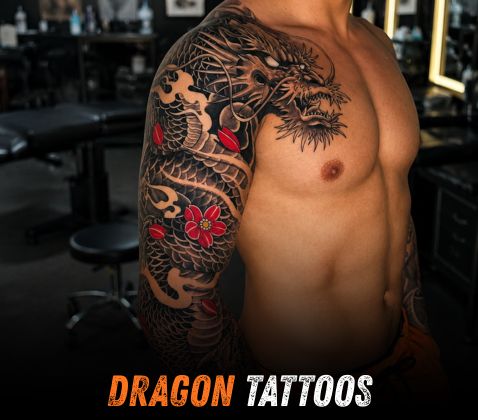
Dragon Tattoos (Ryū)
Dragon tattoos depict a serpentine East Asian dragon associated with water and sky rather than the winged fire-breathing dragons common in Western mythology. Dragon symbolism represents wisdom, protection, power, balance, and good fortune. Japanese dragons function as protective and benevolent forces rather than destructive monsters. Traditional dragon compositions depict movement through clouds, waves, smoke, or wind. Static dragons rarely appear within classical Irezumi. Full back pieces, chest panels, and full sleeves provide the best placements because dragons require large flowing compositions.
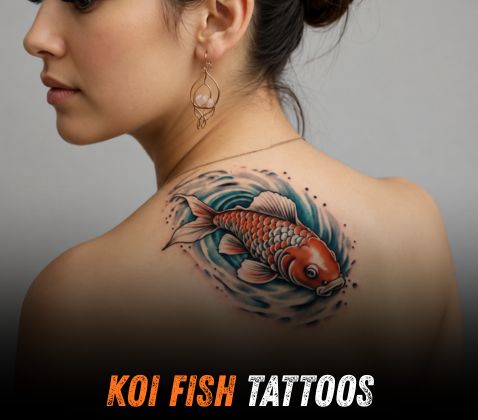
Koi Fish Tattoos (Koi)
Koi tattoos depict ornamental carp connected to East Asian mythology and perseverance symbolism. Koi symbolise courage, resilience, transformation, and overcoming adversity through persistence. Colour changes symbolic meaning. Red koi represent love and bravery. Black koi represent overcoming struggle. Gold koi represent wealth and fortune. Traditional koi compositions always include water elements such as waves or flowing currents. Lotus flowers frequently accompany koi symbolism. Sleeves, forearms, thighs, and calves provide ideal placement due to the koi’s elongated body structure.
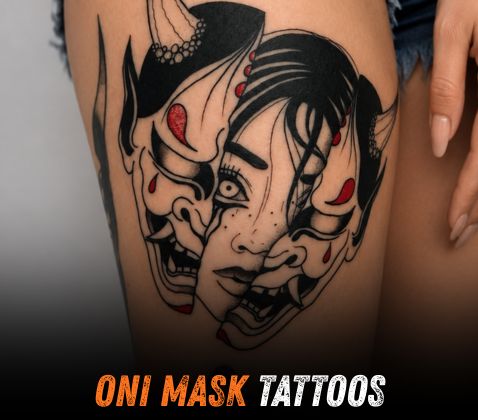
Oni Mask Tattoos (Oni)
Oni tattoos depict horned demon or ogre figures from Japanese folklore. Oni symbolism represents protection through fear, punishment of evil, personal strength, and the duality of destruction and guardianship. Traditional Oni compositions frequently pair flames, lightning, peonies, smoke, or dramatic negative space around the face. Chest panels, shoulders, upper arms, and thighs provide the best Oni tattoo placement.
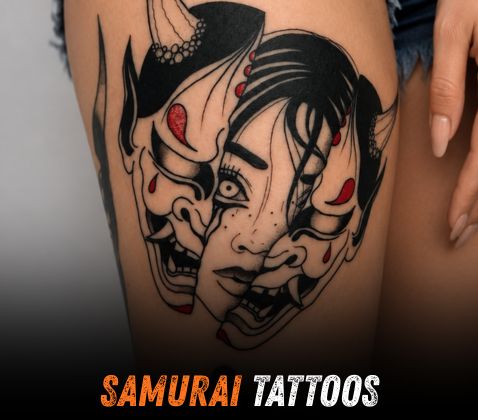
Samurai Tattoos (Bushi)
Samurai tattoos depict feudal Japanese warriors dressed in armour and weaponry. Samurai symbolism represents honour, discipline, loyalty, courage, and commitment to the bushido code. Traditional samurai compositions emphasise detailed armour rendering, facial expression, battle movement, and surrounding environmental storytelling. Back pieces, upper sleeves, and chest panels provide sufficient space for large-scale samurai detail.
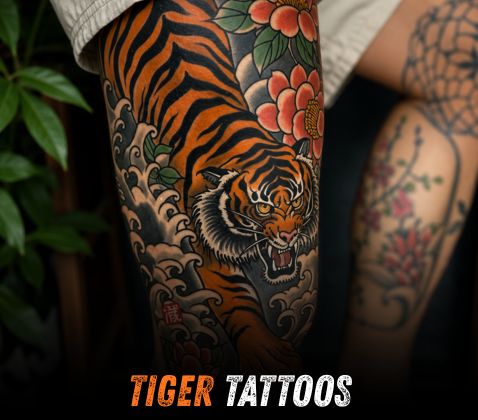
Tiger Tattoos (Tora)
Tiger tattoos depict powerful predators associated with courage and protection in East Asian symbolism. Tiger symbolism represents strength, bravery, protection against evil spirits, disease, and bad luck. Traditional Japanese symbolism associates the tiger with autumn and the north wind. Traditional tiger compositions pair wind bars, bamboo, and dynamic movement. Tigers traditionally avoid direct pairing with dragons inside the same panel. Back pieces, sleeves, chest panels, and thighs suit tiger tattoo compositions best.
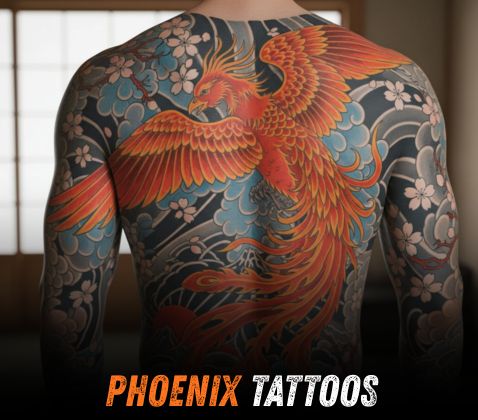
Phoenix Tattoos (Hō-ō)
Phoenix tattoos depict the Japanese hō-ō, a majestic mythological bird distinct from the Western fire phoenix. Phoenix symbolism represents rebirth, resilience, transformation, grace, and triumph over adversity. Traditional phoenix compositions depict the bird ascending through clouds, flames, or floral environments with elaborate flowing tail feathers. Back pieces, sleeves, and chest panels provide the best compositional space for phoenix tattoos.
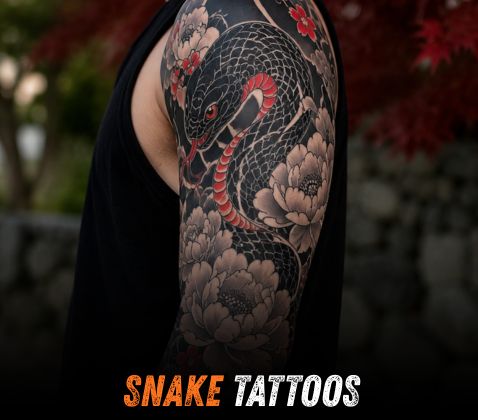
Snake Tattoos (Hebi)
Snake tattoos depict serpents associated with renewal, wisdom, protection, and transformation. Japanese snake symbolism reflects regeneration due to skin shedding. White snakes especially connect to divine feminine symbolism and the goddess Benzaiten. Traditional snake compositions frequently pair peonies, skulls, swords, or floral backgrounds. The snake’s elongated body wraps naturally around limbs. Sleeves, forearms, calves, and thighs provide ideal snake tattoo placement.
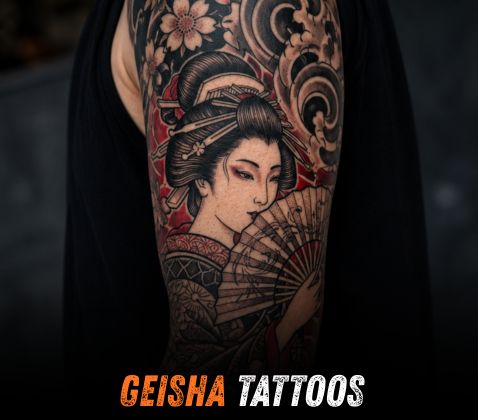
Geisha Tattoos (Geisha)
Geisha tattoos depict traditional Japanese female entertainers trained in music, dance, conversation, and classical arts. Geisha symbolism represents refinement, discipline, beauty, artistry, and cultural elegance rather than eroticism. Traditional geisha compositions focus heavily on facial detail, kimono texture, floral framing, and architectural or landscape elements. Back pieces, chest panels, and thighs provide sufficient space for portrait-level detail.
Floral Symbols
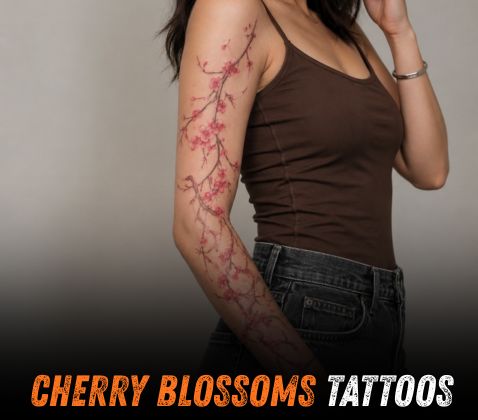
Cherry Blossoms (Sakura)
Cherry blossom tattoos depict the flowers of the Japanese cherry tree. Sakura symbolism represents impermanence, mortality, beauty, and the transient nature of life through the concept of mono no aware. Cherry blossoms align with spring and traditionally pair with other spring or seasonally neutral motifs. Floating blossom petals frequently function as connective background elements across sleeves and back pieces.
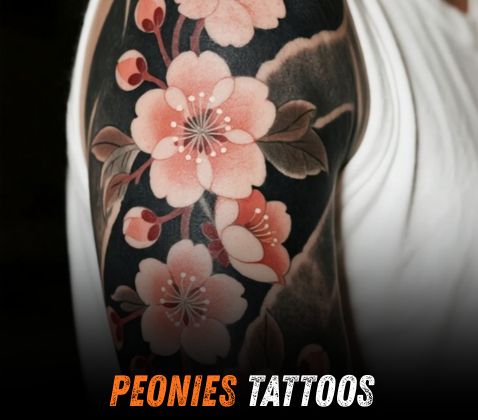
Peonies (Botan)
Peony tattoos depict large, layered flowers associated with prosperity and status. Peony symbolism represents wealth, bravery, prosperity, beauty, and acceptance of life’s uncertainty. Peonies align with spring and summer. Traditional compositions frequently pair peonies with dragons, snakes, lions, or butterflies. Back pieces, chest panels, sleeves, and forearms provide strong placement for peony compositions.
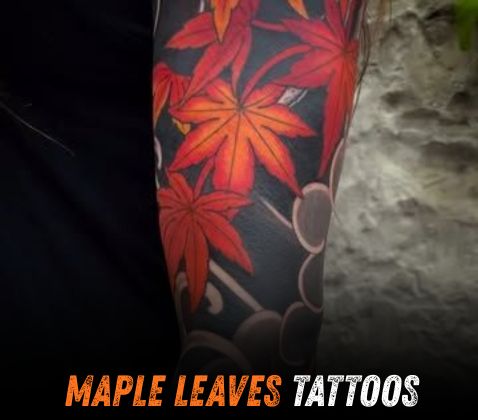
Maple Leaves (Momiji)
Maple leaf tattoos depict autumn Japanese maple leaves. Maple symbolism represents seasonal change, impermanence, maturity, and transformation. Maple leaves belong to autumn compositions and traditionally pair with other autumn elements. Falling maple leaves function commonly as transitional background elements across large-scale compositions.
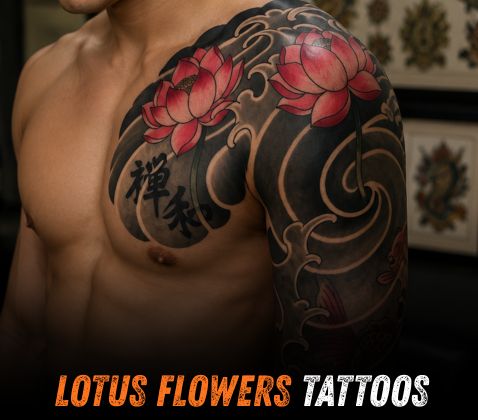
Lotus Flowers (Hasu)
Lotus tattoos depict aquatic flowers that bloom cleanly above muddy water. Lotus symbolism represents purity, enlightenment, perseverance, and spiritual growth through adversity. Traditional lotus compositions pair frequently with koi fish, Buddhist imagery, and water elements. Thighs, chest panels, sleeves, and back pieces provide ideal lotus tattoo placement.
How to Choose a Japanese Tattoo Artist?
Choosing the right Japanese tattoo artist matters more than choosing the right motif alone. Traditional Japanese tattooing requires compositional knowledge, body-flow understanding, symbolic literacy, and technical consistency that many general tattoo artists do not specialise in.
Verify Japanese-style Specialisation
Strong Japanese tattoo artists maintain portfolios heavily focused on Japanese compositions rather than occasional isolated pieces.
Study Compositional Flow
Traditional Japanese tattoos should wrap naturally around the body instead of appearing flat or disconnected.
Assess Knowledge of Traditional Rules
Skilled artists explain motif meanings, seasonal consistency, and symbolic pairing traditions during consultations.
Ask About Technique
Clarify whether the artist works in Wabori, Tebori, or both. Authentic Tebori training requires years of specialised practice.
Review Healed Tattoos
Healed work reveals colour retention, line stability, and long-term compositional quality more accurately than fresh tattoos.
Evaluate Consultation Quality
Experienced Japanese-style artists discuss body flow, placement, motif relationships, and future expansion before beginning large-scale projects.
Where to Get a Japanese Tattoo?
Japanese tattooing requires artists with strong compositional planning, motif literacy, and large-scale design experience. Consultation quality matters especially heavily for Japanese tattoos because sleeves, chest panels, and back pieces function as connected narrative compositions.
Hardwork Tattoos in Brampton, ON, remains a strong option for clients exploring Japanese-style tattoo work and larger custom compositions. Consultation-focused planning helps clients choose motifs, placements, flow direction, and future expansion paths before tattooing begins.
Clients approaching Japanese tattooing for the first time benefit from bringing visual references, researching motif meanings beforehand, and discussing symbolic intent during consultations rather than focusing only on aesthetics.
Conclusion
Japanese tattoos are symbolic stories etched in ink, built on centuries of seasonal rules, symbolic pairings, and body-flow composition. While there are plenty of choices in terms of motifs, a wise selection respects the Japanese culture behind each design. With the right knowledge of the most popular Irezumi styles and motifs discussed here, you can make a confident and suitable choice, and pick the placement that best fits your comfort level.
Once you have made up your mind regarding the design and its spot, simply head to a leading tattoo studio, get yourself inked, and be ready to flaunt your tattoo.
Frequently Asked Questions
The exact duration depends on the chosen design. A traditional Japanese full sleeve usually requires 15-30 or more tattoo hours across multiple sessions, while large-scale back pieces commonly require 30-60 or more hours. A complete traditional bodysuit can take several years to finish.
Yes. Being quite elaborate, Japanese tattoos require immense pain tolerance. But there are some areas that hurt less than others. Body parts with thick skin and fewer nerve endings, like the thigh, shoulder, and upper arm, are relatively more comfortable, while the sternum, collarbone, and ribs feel significantly more intense.
Tebori is the traditional hand-poke technique, where pigment is inserted manually using a rod fitted with needles, producing softer gradients and deeper ink diffusion. Wabori keeps the same classical Irezumi aesthetics but is executed with modern tattoo machines. Many contemporary Japanese-style artists technically practise Wabori rather than classical Tebori.
Traditional Japanese tattoos generally feature rich colors such as red, orange, and black. But their black and white variants exist as well.
Yes, Japanese tattoos can be customized with related motifs and designs combined together, as long as the composition respects traditional seasonal consistency and symbol-pairing rules.
Japanese sleeve tattoos are designed as one continuous artwork that wraps the entire arm and flows with its cylindrical shape. In contrast, other sleeve tattoos can include a set of separate, isolated designs.