
Sikh Warrior Tattoos Capture Strength, Faith, and the Spirit of an Unbreakable Community
Sikh warrior tattoos honor a legacy defined by courage, discipline, resilience, and deep spiritual grounding. These designs celebrate the heritage of fearless Sikh warriors while embodying strength, sacrifice, and devotion. Whether you choose Khanda symbols, lions, eagles, or depictions of Nihang warriors, a Sikh warrior tattoo becomes a powerful reminder of identity, valor, and inner fire.
Book Your Name Tattoo Appointment
Reserve your session to get a custom Sikh warrior tattoo crafted with precision, symbolism, and respect for the tradition.
What defines a Sikh warrior tattoo?
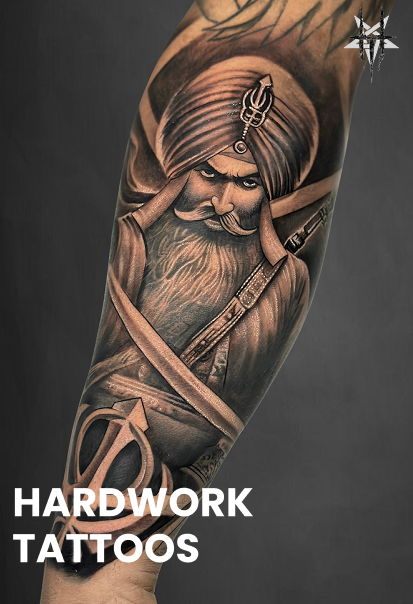
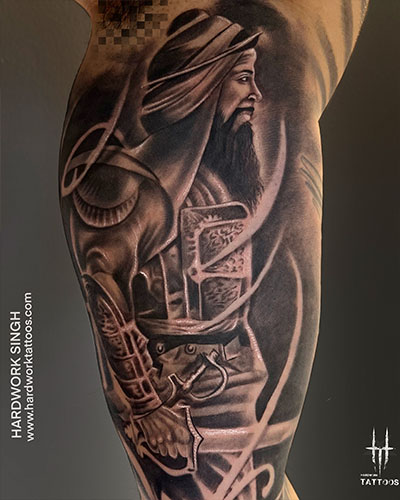
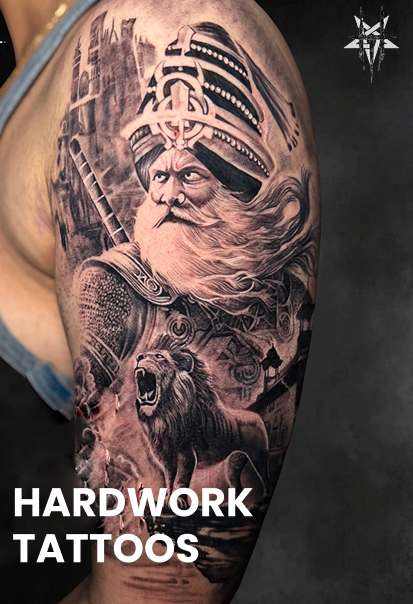
A Sikh warrior tattoo depicts the martial identity of the Khalsa through figures, symbols, and weapons. The design shows the wearer’s connection to bravery, faith, and Sikh history. A Sikh warrior tattoo uses visual elements like Khanda symbols, Shastar weapons like Kirpan and Chakram, and portraits of iconic warriors like Hari Singh Nalwa to express courage and devotion. The artwork often merges spirituality with strength to reflect the Saint Soldier identity of Sikhs.
What is the cultural and spiritual significance in Sikh heritage?
A Sikh warrior tattoo carries cultural significance because it represents the Khalsa tradition of protecting justice. The design honours spiritual values and historic principles. Sikh scriptures and traditions describe the Khalsa as both meditative and warrior minded. A tattoo inspired by this philosophy reflects balance between devotion and duty. It communicates the wearer’s respect for Sikh history, martial discipline, and spiritual responsibility.
Meaning & Symbolism Behind Sikh Warrior Tattoos
Sikh warrior tattoos represent the rare blend of kindness and fearlessness that defines the Sikh identity. These tattoos symbolize courage in adversity, compassion in action, and unwavering faith in one’s values. People choose these tattoos to showcase their heritage, honor their community, or express their personal warrior spirit. Every design carries cultural depth, historical significance, and emotional meaning.
The Saint-Soldier (Miri-Piri) philosophy
The Miri Piri philosophy symbolises the unity of spiritual and temporal power in Sikhism. The tattoo expresses the ideal balance of meditation and action. Miri represents worldly responsibility. Piri represents spiritual growth. A Sikh warrior tattoo that incorporates both elements shows the complete identity of a Khalsa protector.
Fearlessness, justice & the warrior of God
Fearlessness and justice represent the Sikh duty to defend righteousness. The warrior of God concept signifies devotion to divine truth. Sikh history includes warriors who fought against tyranny with courage and compassion. Tattoos inspired by this ethos express boldness, clarity, and moral strength.
Spiritual interpretations of warrior tattoos
A Sikh warrior tattoo offers spiritual meaning because it reflects inner discipline. Many people choose these designs to symbolise victory over internal struggles. Spiritual warfare describes the fight against ego, negativity, and fear. Tattoo elements like lions, Khandas, and Shastar weapons communicate inner strength and purity.
Popular Sikh Warrior Tattoo Designs
These themes reflect core Sikh values and warrior traditions, each offering its own distinctive power and symbolism.
Historical Sikh Warrior Tattoos
Historical Sikh warrior tattoos depict legendary figures and scenes from Sikh history. These designs honour bravery and sacrifice. Common historical designs include the following.
- Banda Singh Bahadur illustrations that show leadership and justice.
- Baba Banda Singh Bahadur portraits with symbolic weapons like the Khanda.
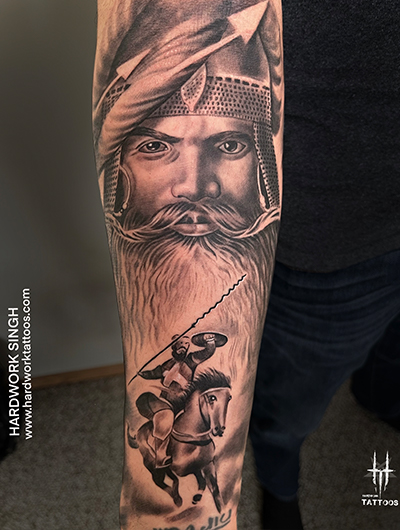
- Hari Singh Nalwa portraits that represent fearlessness and military strategy.
- Sikh Empire warriors with armour and traditional attire.
Warrior on horseback designs that capture motion and battlefield strength.
Symbolic Sikh Warrior Concepts
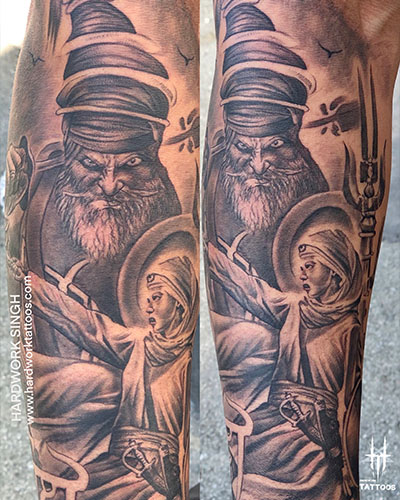
Symbolic Sikh warrior concepts provide artistic interpretations of power and identity. These ideas help create impactful tattoo designs. Popular concepts include the following.
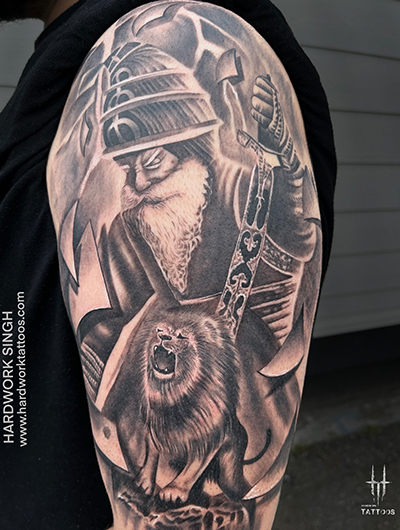
- Khanda with lion combinations that represent courage and divine duty.
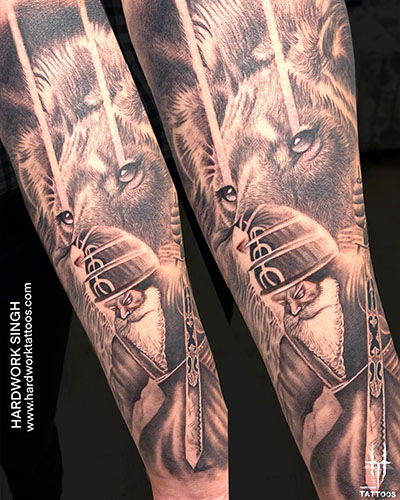
- Singh or lion themed warrior designs that reflect the title Singh meaning lion.
- Ashtabhuja Shastar tattoos showing multiple weapons held in divine form.
- Chakram and weapon centric motifs for strength and warrior readiness.
- Tiger warrior concepts symbolising intensity.
- Fearless warrior symbols for bold personal identity.
Modern & Artistic Sikh Warrior Designs
Modern Sikh warrior designs offer creative variations in style and detail. These tattoos suit different aesthetic preferences. Popular choices include the following.
- Realistic portraits with detailed shading.
- Small minimalist warrior tattoos with clean line art.
- Tribal Sikh warrior tattoos with bold shapes.
Three dimensional Sikh weapon tattoos for dramatic visual depth.
Sikh Religious Symbols in Warrior Tattoos Khanda-Focused Designs
Khanda focused designs highlight the primary Sikh emblem that represents sovereignty and spiritual strength. Common themes include the following.
- Khanda on shoulder or arm with bold line work.
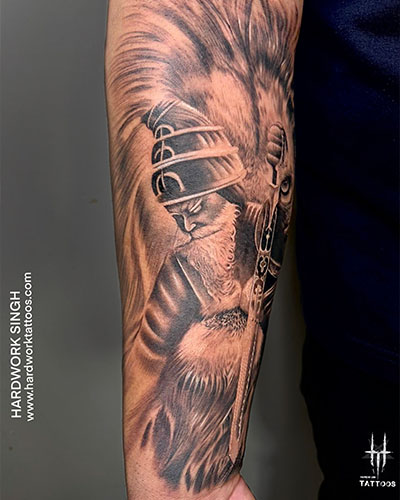
- Khanda combined with lion imagery to intensify the warrior symbolism.
Khanda Sahib and Khalsa symbolism for identity and pride.
Sikh Shastar (weapon) Tattoos
Sikh Shastar weapon tattoos showcase traditional weapons used by warriors of the Khalsa. Design examples include the following.
- Khanda sword tattoos with detailed blades.
- Sikh sword tattoos depicting Kirpan or Talwar.
Chakram and multi weapon motifs arranged in circular compositions.
Warrior Identity Symbol Tattoos
Warrior identity symbol tattoos reflect values linked to the Khalsa ethos. People choose Singh identity symbols like the lion, fearless warrior symbol tattoos that express martial pride and courage.
Animal Symbols in Sikh Warrior Tattoos
Sikh warrior tattoos often incorporate powerful animals that represent strength, leadership, and courage.
Lion Tattoos
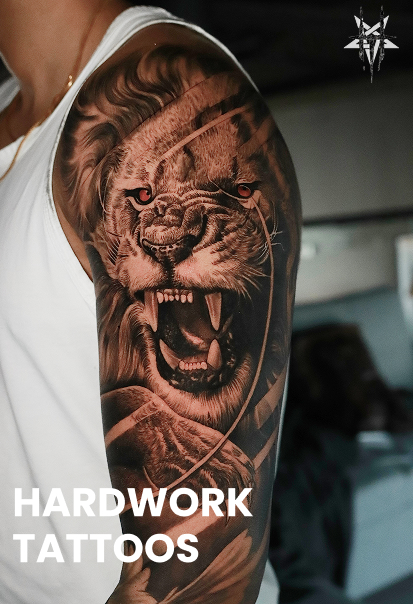
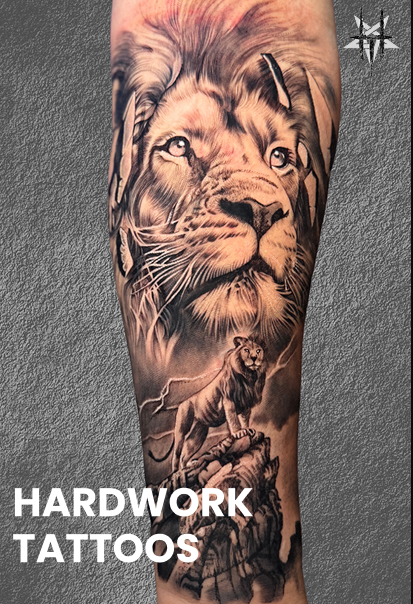
The lion reflects bravery, leadership, and royal spirit, a core symbol of Sikh masculinity and identity.
Tiger Tattoos
The tiger symbolizes energy, aggression, and fearlessness, often paired with warrior portraits or Khanda symbols.
Eagle Tattoos
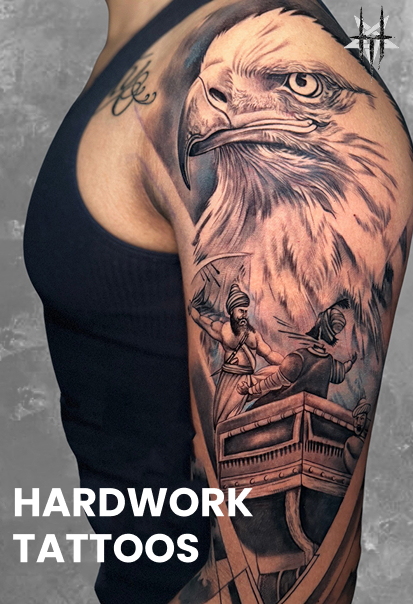
The eagle represents vision, sharp focus, and dominance. It’s a popular choice to complement Khanda designs or warrior imagery.
Patriotism and Identity in Sikh Warrior Tattoos
Patriotic themes, historical references, and tributes to Sikh gurus often appear in Sikh warrior tattoos. These elements highlight reverence for tradition, pride in the Panth, and respect for leaders who shaped Sikh history.
Sikh Warrior Tattoo Ideas by Body Placement
Large, detailed designs shine on the upper arm, chest, back, and shoulder. Medium-sized Khanda or animal motifs work beautifully on the forearm, bicep, or calf. Choose placement based on how bold and visible you want the artwork to be.
Forearm Warrior Tattoos
Forearm Sikh warrior tattoos display powerful imagery in a prominent visible area. The placement suits medium sized artwork. Popular forearm ideas include the following.
- Portraits of Sikh warriors
- Khanda and warrior compositions arranged vertically
Arm & Sleeve Tattoo Designs
Arm and sleeve tattoos create large storytelling compositions. These designs allow detailed scenes. Popular sleeve ideas include the following.
- Half sleeve or full sleeve warrior scenes
Dynamic battlefield compositions with movement and depth
Hand, Back & Other Placements
Hand and back placements suit expressive warrior artwork. These areas provide strong visual impact. Common ideas include the following.
- Hand tattoos with symbols and mini warrior designs
- Back tattoos with full scenes and large religious icons
Personalizing Your Sikh Warrior Tattoo
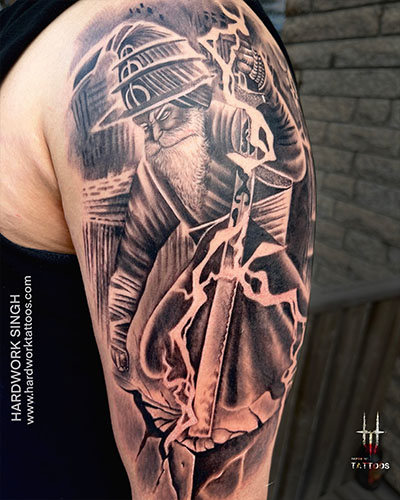
Customization ensures that your tattoo carries your personal story and connection to the Sikh warrior ethos. You can personalize with the following elements.
- Battle elements like swords, shields, or armor
- Sacred symbols like the Khanda or Ik Onkar
- Portraits of Sikh warriors or Nihang traditions
- Animals that represent fearlessness
- Patriotic or spiritual backgrounds
- Quotes in Gurmukhi
How to Choose the Right Sikh Warrior Tattoo Style?
You can evaluate styles by comparing artistic detail, line work, and cultural feel. Each style communicates a different mood. Traditional designs appear bold. Modern styles add realism or minimalism. You can choose a style by matching it with your personality and the story you want the tattoo to express. Realism works for portraits. Line art suits subtle designs. Tribal styles emphasize power. Illustrative styles add creative flow. You should choose color or black and grey based on contrast and emotion. Each palette creates a unique impact. Black and grey suits historical themes. Color works well for symbolic weapons and lions.
Your Experience During the Appointment
Your session includes detailed discussion about your concept, symbolic meanings, and design preferences. Artists sketch custom versions until the artwork feels authentic and respectful to Sikh culture. Clean execution, line precision, and shading bring the warrior spirit to life. Aftercare ensures your tattoo heals with clarity and depth.
Why Clients Choose Us for Sikh Warrior Tattoos
Clients trust the studio for its understanding of Sikh symbolism, its expertise in detailed shading, and its ability to capture emotion and heritage through ink. The focus stays on accuracy, respect, cultural authenticity, and striking visual impact.
FAQs
Why are warrior themed Sikh tattoos popular today?
People choose warrior themed Sikh tattoos because these designs connect them to courage and heritage. These tattoos reflect pride, cultural identity, and personal strength. Modern Sikh tattoo enthusiasts value designs that honour ancestry, express inner resilience, or depict martial history. Tattoo trends in portrait realism, small line art, and weapon centric styles have expanded interest in Sikh warrior imagery.
Are Sikh Warrior Tattoos Allowed in Sikhism?
Sikh teachings discourage harmful actions against the body, yet they do not contain explicit bans on tattoos. Interpretations vary by community. Tattoo decisions depend on personal understanding of Sikh principles. Cultural acceptance varies across Sikh communities in India and abroad. Many modern Sikhs accept warrior themed tattoos when done respectfully.
How do tattoos based on Sikh history add meaning?
Tattoos based on Sikh history provide deep emotional value because they honour real figures and events. These designs strengthen cultural connection. Portraits of historic warriors or scenes from battles like Chamkaur add personal depth.
How do combined symbolic concepts enhance tattoo meaning?
Combined symbolic concepts create richer expressions of identity. These combinations merge multiple values in one design. Popular combinations include lion plus Khanda plus warrior portraits for spiritual and martial balance.
How do tattoos represent bravery, faith, and identity?
Tattoos represent bravery, faith, and identity by merging symbols, scripture inspired elements, and warrior imagery. These motifs reflect personal and cultural pride.