
“How much is this going to hurt?” remains the most common question tattoo artists hear from both first-time clients and experienced collectors. Tattoo pain feels unpredictable before a session, yet anatomy makes tattoo pain highly explainable. Skin thickness, fat coverage, muscle density, nerve concentration, and bone proximity determine how intensely different body zones react during tattooing.
The most painful tattoo areas usually contain the thinnest skin, the least muscle or fat cushioning, and the highest concentration of nerve endings. Areas such as the ribs, sternum, spine, hands, and feet create sharper sensations because the tattoo machine works close to bone and sensitive nerve tissue. Fleshier zones such as the outer thigh, outer upper arm, and calf feel significantly more manageable. Tattoo pain differs slightly across male and female bodies due to differences in muscle mass, fat distribution, and hormonal sensitivity. Pain tolerance still varies heavily between individuals.
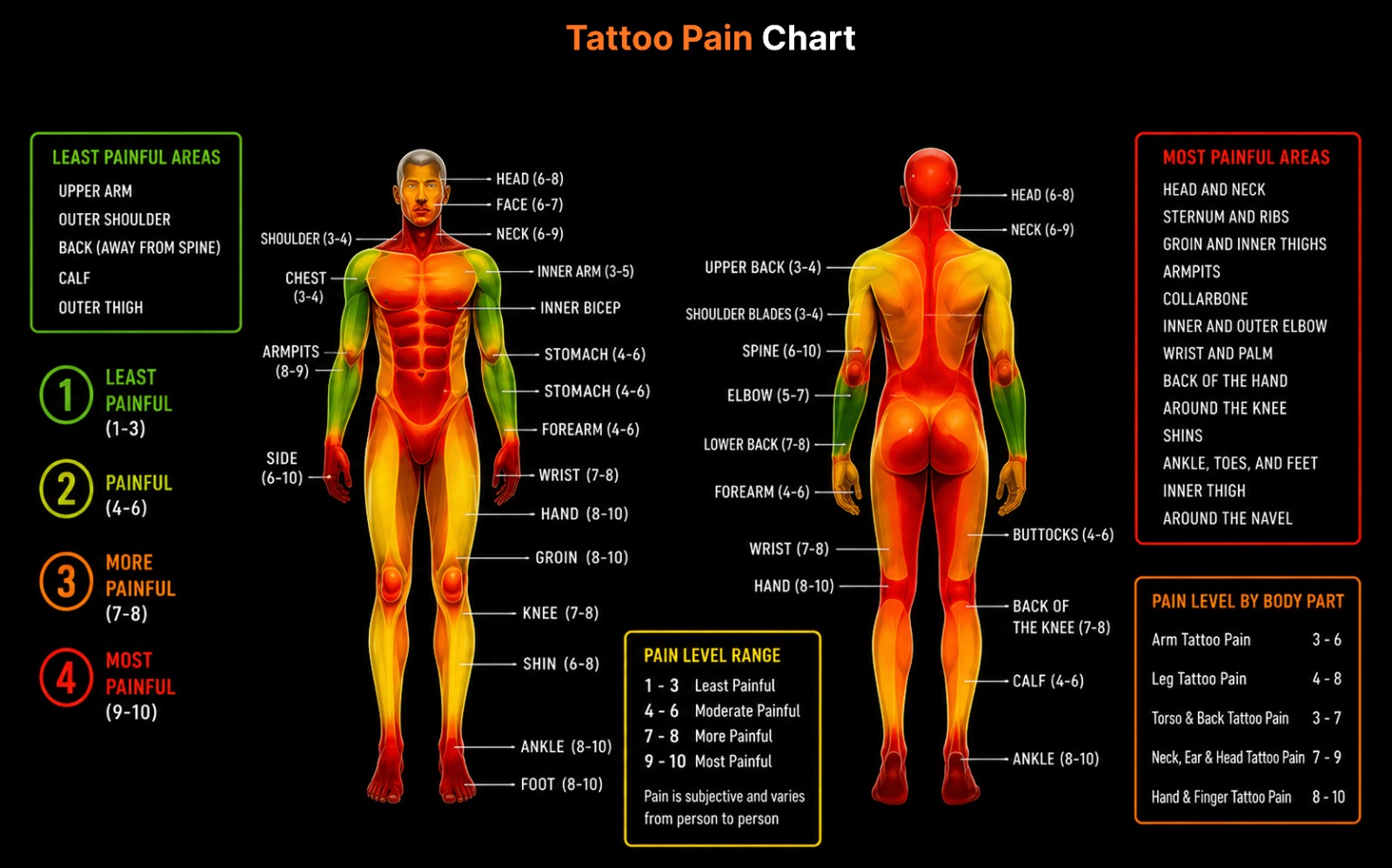
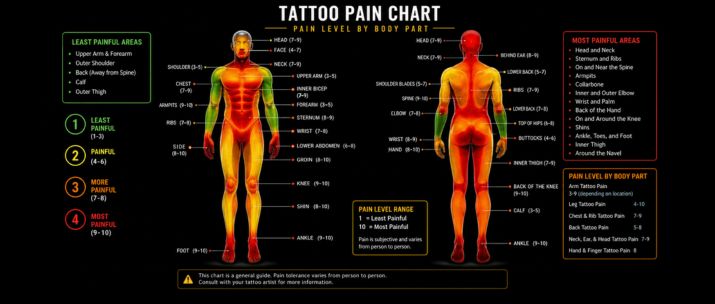
This guide breaks down tattoo pain by body part, including arms, legs, chest, ribs, back, hands, neck, feet, and head placement. The article covers the most painful tattoo areas, the least painful tattoo areas, tattoo pain management strategies, and a complete tattoo pain chart for visual reference. Refer to the tattoo pain chart below for a full visual breakdown of tattoo pain by body part.
Tattoo Pain Chart by Body Part
Tattoo pain changes significantly across different body regions and even between nearby zones on the same limb. Outer placements with thicker muscle and skin usually feel manageable, while thin-skinned or bony areas create sharper and more intense sensations. Use the tattoo pain chart alongside the body-part breakdowns below to compare pain levels across each major tattoo placement.
Arm Tattoo Pain
| Area | Description | Pain Level |
|---|---|---|
| Outer Upper Arm & Shoulder Cap | Outer upper arm and shoulder cap tattoo placement rank among the least painful tattoo areas on the body. Thick muscle tissue and stable skin cushion the tattoo needle effectively, reducing sharp vibration and nerve sensitivity. Most clients describe the sensation as a mild scratching or dull dragging feeling. | 2-3/10 |
| Inner Upper Arm & Inner Bicep | Inner upper arm tattoo placement feels noticeably more sensitive than the outer arm due to thinner skin and closer proximity to major nerves and blood vessels. The soft skin texture increases stinging sensations during detailed line work or shading. | 4-5/10 |
| Outer Forearm | Outer forearm tattoo placement remains one of the most beginner-friendly tattoo locations. The flat surface contains decent skin thickness with moderate muscle underneath. Most clients tolerate long forearm sessions comfortably. | 2-3/10 |
| Inner Forearm | Inner forearm tattoo placement contains softer and thinner skin with greater vein and nerve visibility. Fine-line work and repeated shading passes feel sharper here than on the outer forearm. | 3-4/10 |
| Elbow Ditch | Inner elbow tattoo placement ranks among the most painful arm tattoo areas. Thin skin stretches over a high nerve concentration near a constantly moving joint. Clients commonly describe a burning and electric sensation during tattooing. | 7-8/10 |
| Outer Elbow | Outer elbow tattoo placement creates a distinct vibrating sensation because the tattoo machine works directly above the bone. Dry skin texture and constant joint movement make tattooing more difficult for both artist and client. | 6-7/10 |
| Wrist | Wrist tattoo placement contains thin skin, visible tendons, and concentrated nerve endings. Inner wrist placement feels more intense than outer wrist tattooing. | 5-6/10 |
Arm tattoo pain ranges from highly manageable beginner zones to some of the sharpest joint-related pain points on the body depending on placement.
Leg Tattoo Pain
| Area | Description | Pain Level |
|---|---|---|
| Outer Thigh | Outer thigh tattoo placement remains the most comfortable large tattoo placement on the body. Thick muscle and fat create strong cushioning between the tattoo needle and deeper tissue. Most clients describe thigh tattoo pain as mild scratching. | 2-3/10 |
| Inner Thigh | Inner thigh tattoo placement feels significantly more sensitive due to soft skin texture, increased nerve endings, and constant skin movement during sessions. Long shading passes feel especially intense. | 6-7/10 |
| Kneecap | Kneecap tattoo placement creates sharp vibration directly against the patella bone. Thin skin and constant joint flexing amplify discomfort. | 7-8/10 |
| Knee Ditch | Back-of-knee tattoo placement ranks among the most painful tattoo areas on the leg. Thin folded skin stretches across a dense nerve cluster behind the knee joint. | 8/10 |
| Outer Calf | Outer calf tattoo placement feels manageable for most clients because thick calf muscle absorbs much of the tattoo machine vibration. | 3-4/10 |
| Shin | Shin tattoo placement contains thin skin directly above the tibia bone with very little muscle buffering. Many clients describe shin tattoos as a sharp scraping sensation. | 6-7/10 |
| Ankle | Ankle tattoo placement combines thin skin, small bones, and repeated movement during tattooing. Inner ankle placement feels more sensitive than outer ankle placement. | 6-7/10 |
| Foot | Top-of-foot tattoo placement contains dense nerve endings with bones positioned close to the skin surface. The vibration often radiates through the entire foot. | 7-8/10 |
Leg tattoo pain changes dramatically between zones. Outer thigh placement feels highly tolerable, while knee ditch and foot placement rank among the most painful tattoo areas on the body.
Chest & Rib Tattoo Pain
| Area | Description | Pain Level |
|---|---|---|
| Outer Chest | Outer chest tattoo placement across the fleshy pectoral area feels manageable for most clients due to moderate muscle padding. Most sensations feel similar to scratching or controlled burning. | 3-4/10 |
| Sternum | Sternum tattoo placement creates intense vibration because the skin sits almost directly above the breastbone. Minimal fat cushioning increases sharpness during both lining and shading. | 7-8/10 |
| Collarbone | Collarbone tattoo placement contains thin skin stretched over prominent bone. Tattoo machine vibration radiates across the upper chest and shoulder area. | 6-7/10 |
| Rib | Rib tattoo placement ranks among the top 3 most painful tattoo areas on the body. Thin skin rests directly over hard rib bones with very little muscle or fat protection. Breathing movement continuously shifts the skin during tattooing. | 8-9/10 |
Women with lower chest muscle mass may experience sternum and central chest tattoos more intensely than men. Rib tattoo pain remains extremely high across both genders due to nearly identical rib anatomy. Chest and rib tattoos create visually striking placement options, yet sternum and rib sessions require strong pain tolerance and preparation.
Back Tattoo Pain
| Area | Description | Pain Level |
|---|---|---|
| Upper Back | Upper back tattoo placement between the shoulder blades contains thick skin and good muscle coverage. Large tattoo sessions remain relatively manageable in this area. | 3-4/10 |
| Middle Back | Middle back tattoo placement feels similar to upper back placement, although sensitivity increases closer to the spine. | 4-5/10 |
| Spine | Spine tattoo placement creates a sharp reverberating sensation due to direct vibration along the vertebral column. Bone conduction amplifies the feeling significantly. | 7-8/10 |
| Lower Back | Lower back tattoo placement feels manageable across fleshy areas but becomes more painful near the lumbar spine. | 5-6/10 across fleshy zones; 7/10 near the spine |
| Shoulder Blade | Shoulder blade tattoo placement creates a scraping vibration sensation when the tattoo needle passes directly above the scapula bone. | 5-6/10 |
Back tattoos remain among the more tolerable large-scale tattoo placements when artists avoid prolonged sessions directly over the spine.
Neck, Ear & Head Tattoo Pain
| Area | Description | Pain Level |
|---|---|---|
| Side Neck | Side neck tattoo placement contains thin skin positioned close to major nerves running upward from the spine. The vibration often transfers into the jaw and skull. | 6-7/10 |
| Front Neck & Throat | Front neck tattoo placement ranks among the most sensitive tattoo areas on the body due to dense nerve mapping, visible veins, and extremely thin skin. | 8/10 |
| Back Neck | Back-of-neck tattoo placement creates sensations similar to upper spine tattooing because the skin rests close to the cervical vertebrae. | 6-7/10 |
| Behind the Ear | Behind-the-ear tattoo placement combines delicate skin with direct bone contact. Many clients notice the sound and vibration resonating through the skull. | 6-7/10 |
| Ear | Ear and helix tattoo placement work across cartilage rather than soft tissue. Clients often describe the feeling as a grating or crunching sensation. | 5-6/10 |
| Scalp | Scalp tattoo placement creates intense skull vibration because thin skin rests directly over bone. | 7-8/10 |
Neck, ear, and head tattoo placements require stronger pain management experience and rarely suit first-time tattoo clients.
Hand & Finger Tattoo Pain
| Area | Description | Pain Level |
|---|---|---|
| Back of Hand | Back-of-hand tattoo placement combines thin skin, visible tendons, and direct bone proximity. Joint movement increases sensitivity during tattooing. | 6-7/10 |
| Palm | Palm tattoo placement contains extremely dense nerve endings and highly sensitive skin. Palm tattoos fade rapidly and rarely maintain strong, long-term detail. | 8-9/10 |
| Knuckle | Knuckle tattoo placement creates a strong vibration against bone with very little soft tissue cushioning. | 7-8/10 |
| Finger | Finger tattoo placement positions the tattoo needle close to small bones and joints. Many clients describe the sensation as sharp and bone-deep. | 7-8/10 |
| Finger Webbing | Finger webbing tattoo placement stretches thin, sensitive skin between the fingers. | 7/10 |
Hand and finger tattoos rank among the most painful tattoo placements while simultaneously fading faster than most other body zones.
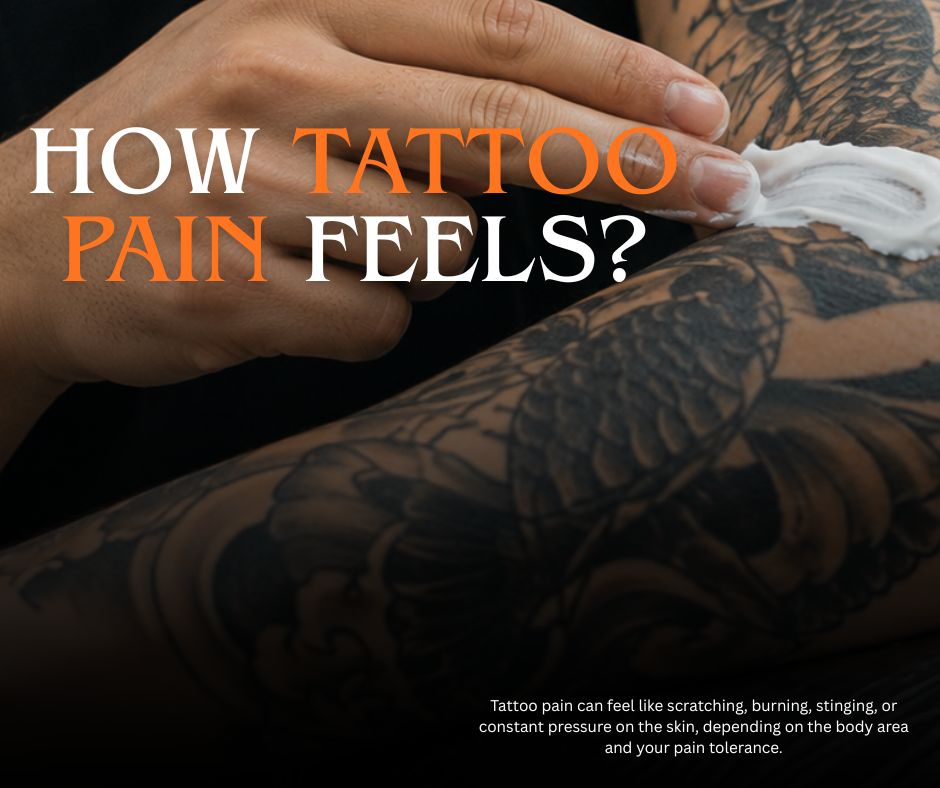
What Are the Most Painful Tattoo Areas?
The most painful tattoo areas contain thin skin, concentrated nerve endings, and minimal muscle or fat cushioning between the tattoo needle and bone.
- RibsThin skin sits directly over hard rib bones while breathing movement continuously shifts the skin.
- SternumMinimal cushioning above the breastbone creates intense vibration.
- SpineBone conduction along the vertebrae amplifies sharp sensations.
- Knee DitchDense nerve clusters sit beneath thin folded skin.
- Elbow DitchMajor nerves and thin skin increase sharp burning sensations.
- Hands and FingersDense nerve endings and exposed joints intensify pain.
- Feet and AnklesThin skin stretches above small bones with strong nerve concentration.
- Head and ScalpSkull vibration creates reverberating discomfort.
- Front Neck and ThroatThin skin and nerve-rich anatomy increase sensitivity.
- Inner Thigh and ArmpitSoft nerve-rich tissue creates sharp stinging sensations.
For placement options by body zone, see the Ultimate Tattoo Placement Guide.
What Are the Least Painful Tattoo Areas?
The least painful tattoo areas share three major characteristics: thicker muscle coverage, higher fat cushioning, and lower nerve concentration.
- Outer ThighThick muscle and fat create the most comfortable large tattoo placement.
- Outer Upper Arm and Shoulder CapStrong cushioning makes these areas ideal for beginners.
- Outer ForearmFlat fleshy skin supports long sessions comfortably.
- Upper Back Away From SpineThick skin and muscle reduce sharp vibration.
- Outer CalfStrong calf muscle absorbs the tattoo machine impact effectively.
- ButtocksHigh fat content reduces sensitivity significantly.
- Outer ChestFleshy pectoral zones remain manageable away from bone.
These placements suit first-time tattoo clients, large-scale tattoo work, and clients with lower pain tolerance. Outer thigh and outer upper arm placement remain the most consistently recommended beginner tattoo areas.
What Are the Different Factors That Influence Tattoo Pain?
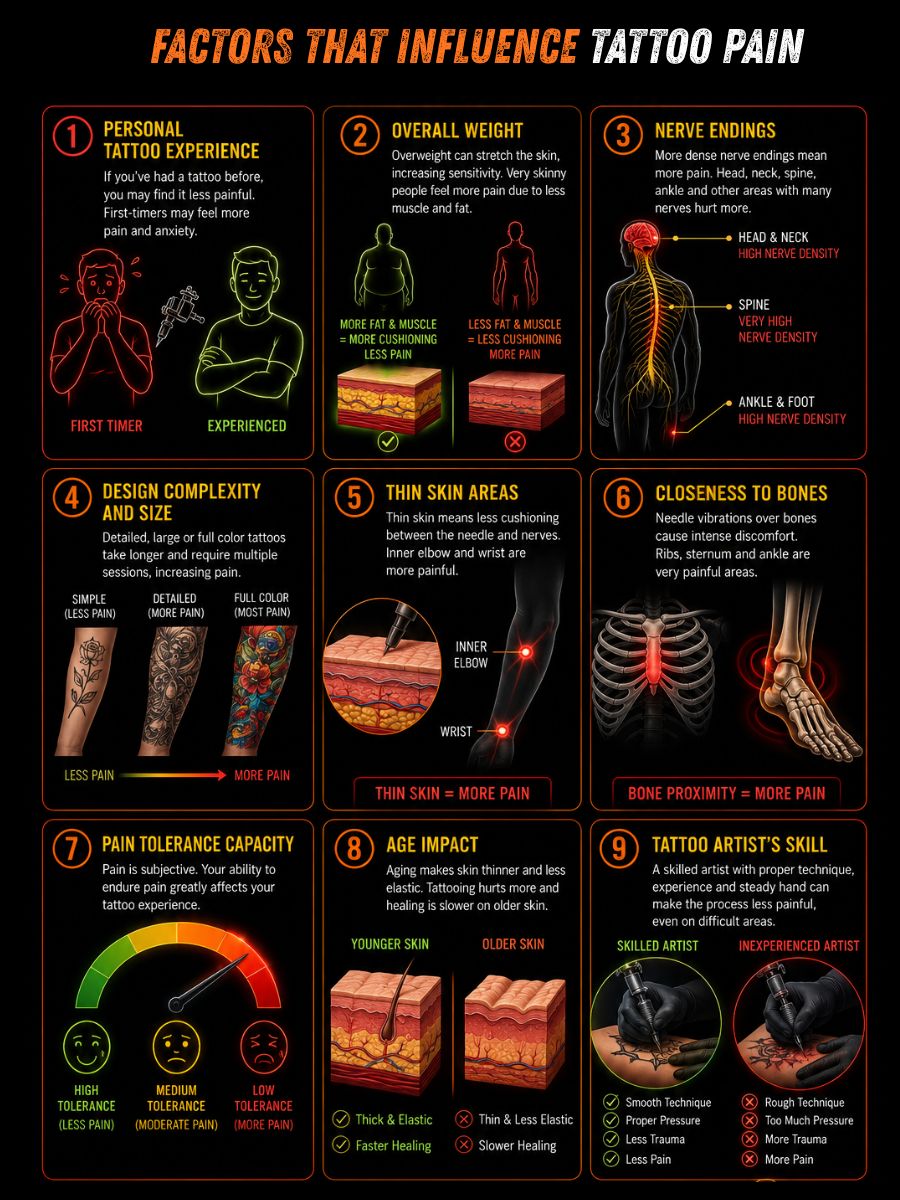
Tattoo pain depends on more than placement alone. Anatomy, skin quality, artist technique, hydration, session length, and mental state all influence how intensely the body responds during tattooing.
Nerve Endings
Areas with dense nerve endings, such as the hands, feet, neck, and inner elbow, transmit pain signals more intensely. Highly sensitive body zones evolved to detect touch and injury rapidly.
Skin Thickness
Thick skin across the outer thigh and upper back cushions the tattoo needle more effectively. Thin skin across the ribs, sternum, and wrist positions the needle closer to nerves and bone.
Fat and Muscle Coverage
Fat and muscle absorb machine vibration and reduce sharpness. Bony placements such as the shin, spine, and sternum transmit vibration directly through skeletal structure.
Tattoo Technique
Colour packing and heavy shading require repeated passes across the same skin area. Long sessions increase inflammation and create tattoo fatigue.
Individual Pain Threshold
Genetics, anxiety levels, previous tattoo experience, and mental preparation all affect pain perception. Experienced tattoo clients usually tolerate discomfort more effectively due to familiarity with the sensation.
Artist Speed and Pressure
Heavy-handed tattooing increases discomfort significantly. Machine type, needle grouping, and artist technique all influence pain intensity.
Physical State on the Day
Hydration, food intake, sleep quality, and alcohol consumption strongly affect pain tolerance. Clients who arrive tired, dehydrated, or hungover usually report higher pain levels.
Skin Condition
Dry, irritated, or sunburned skin feels more sensitive and heals less effectively. Tattoo artists commonly reschedule appointments when skin quality appears compromised.
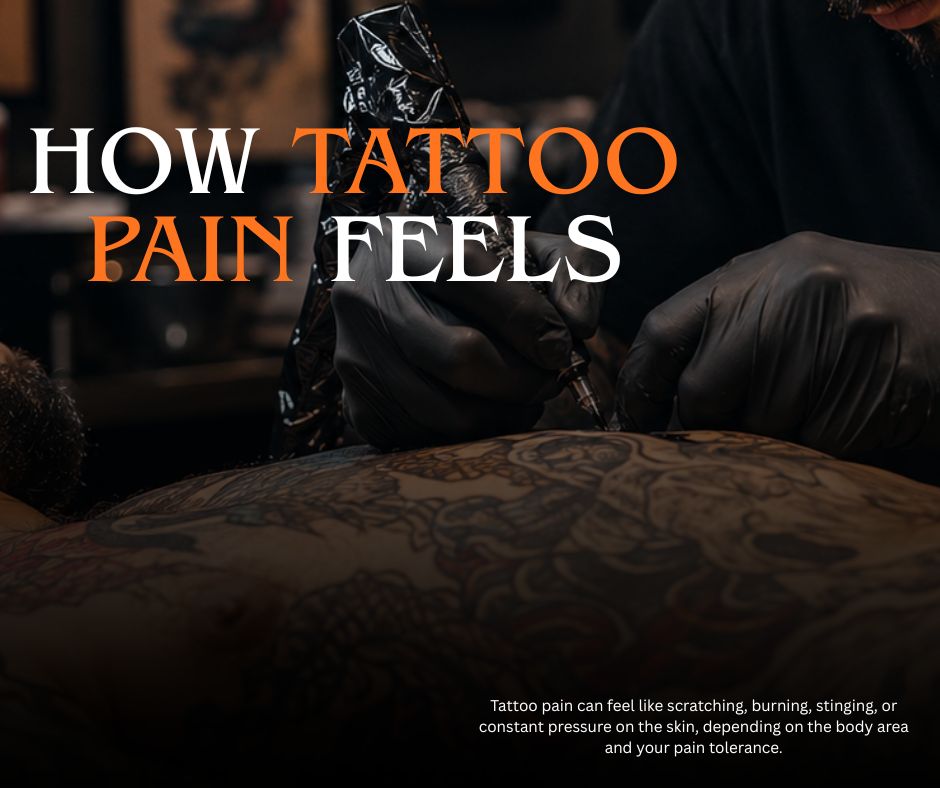
What Does Tattoo Pain Feel Like?
Tattoo pain varies between individuals, yet most clients consistently describe several common sensations during tattoo sessions.
Scratching or Burning
Outline work commonly feels like a hot scratching sensation moving across the skin.
Stinging
Fine-line work and thin-skinned placements create sharper needle sensations.
Vibrating or Buzzing
Bone-adjacent placements such as the ribs, shin, and sternum create deep vibration sensations.
Dull Aching
Long tattoo sessions create bruised and inflamed soreness across heavily worked skin.
Intense Burning
Repeated shading and colour packing create strong heat and irritation across sensitive placements.
Tattoo Pain Level Scale
| Pain Level | Description | Example Placements |
|---|---|---|
| 1-2 | Barely noticeable | Outer thigh, outer upper arm |
| 3-4 | Mild scratching sensation | Forearm, calf, upper back |
| 5-6 | Moderate burning or stinging | Wrist, inner arm, shoulder blade |
| 7-8 | Intense sharp vibration | Ribs, hands, knee ditch, spine |
| 9-10 | Severe and difficult to tolerate | Sternum, armpit, scalp, foot sole |
No tattoo placement creates identical pain for every person because individual pain thresholds and mental tolerances vary significantly.
How Long Does Tattoo Pain Last?
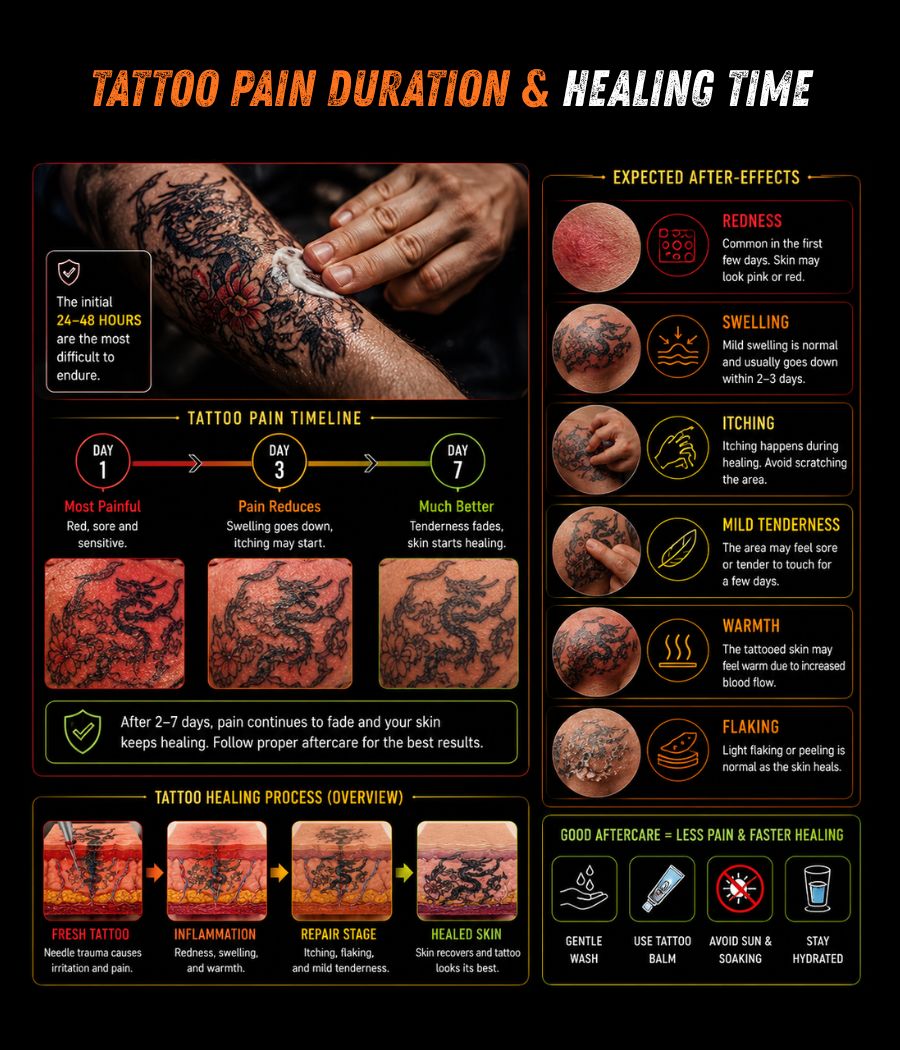
Tattoo pain occurs during the session and throughout the early healing stages after tattooing.
Most clients adjust to the sensation within 15-20 minutes after the session begins. Adrenaline released during the first phase acts as a temporary natural painkiller.
Fresh tattoos usually feel hot, tender, and tight for 24-48 hours after the appointment. The sensation often resembles a moderate sunburn. Days 2-5 usually involve itching, dryness, and peeling as the skin begins healing. Scratching damages healing skin and increases infection risk. Surface healing usually completes within 1-3 weeks, depending on tattoo size and placement. Deeper skin layers continue healing for up to 3-4 months. Pain that worsens after day 3 instead of improving may indicate irritation or infection and requires professional assessment.
How Does Tattoo Pain Compare Between Men and Women?
Tattoo pain varies heavily between individuals regardless of gender, yet anatomical and physiological differences influence how certain body zones feel during tattooing. Hormonal fluctuations may increase pain sensitivity for some women during menstruation due to estrogen-related changes. Some tattoo artists recommend avoiding tattoo sessions during this period when possible.
Men usually carry more muscle mass across the chest, shoulders, and arms. Additional muscle cushioning may reduce chest and sternum sensitivity slightly. Women typically carry more subcutaneous fat across the hips and thighs. Hip and outer thigh tattoo placement often feels more manageable due to increased cushioning. Research suggests women may experience pain more acutely while tolerating prolonged discomfort more effectively. Men often underestimate the intensity of bony placements such as ribs, sternum, and shin tattooing.
| Area | Men | Women |
|---|---|---|
| Chest & Sternum | Moderate to High | High |
| Hips | High | Moderate |
| Outer Thigh | Low | Low |
| Ribs | Very High | Very High |
| Upper Arm | Low | Low |
| Inner Thigh | High | High |
Pain experience ultimately remains individual. These comparisons reflect population-level tendencies rather than guaranteed outcomes.
How to Reduce Tattoo Pain
Tattoo pain management begins before the session starts. Preparation, hydration, communication, and proper recovery habits all improve pain tolerance significantly.
Lidocaine-based numbing creams reduce surface sensitivity before tattooing begins. Many artists recommend applying numbing cream 45-60 minutes before the appointment.
Hydrated skin remains more elastic and tolerates tattooing more effectively. Consistent hydration during the 24-48 hours before the session improves skin condition.
Stable blood sugar improves pain tolerance and reduces dizziness during long sessions.
Alcohol increases bleeding and dehydrates the skin, making tattoo sessions more uncomfortable.
Standing, stretching, eating, and breathing during breaks help reduce tattoo fatigue.
Slow breathing helps regulate stress response and muscle tension during painful placements.
Some women report lower pain tolerance during menstruation due to hormonal changes.
Calm communication and confidence in the artist reduce anxiety-driven pain amplification.
Do Different Tattoo Styles Hurt More?
Tattoo style changes pain intensity because different techniques require different needle groupings, session lengths, and repeated skin passes.
Fine-line tattooing uses precise single-needle or tight needle-group work. The sensation usually feels concentrated but less traumatic overall.
Pain level: Moderate
Blackout tattooing requires slow repeated passes across large skin sections to saturate solid black ink fully. Pain intensifies progressively as inflammation increases.
Pain level: High
Colour tattooing requires repeated packing passes to achieve saturation. White and yellow pigments often require extra passes.
Pain level: Medium to High
Realism tattoos combine shading, saturation, and long session duration. Extended session time usually becomes the biggest pain factor.
Pain level: Medium to High
Stick-and-poke tattooing creates slower and more deliberate puncture sensations without machine vibration. Many clients describe the sensation as cleaner and less abrasive.
Pain level: Medium

What Should First-Time Clients Know About Tattoo Pain?
First-time tattoo pain feels intimidating before the session, yet preparation and realistic expectations improve the experience significantly.
- The first 10-15 minutes usually feel the most intense because the body has not fully adjusted to the sensation yet. Adrenaline and endorphins gradually reduce the shock response during longer sessions.
- Outer upper arm, outer thigh, and outer forearm placement remain the safest beginner tattoo locations due to lower pain and strong skin stability. Ribs, sternum, hands, feet, and neck placements rarely suit first tattoos.
- Tattoo pain represents the body’s normal response to repeated needle penetration rather than a medical emergency. Moderate discomfort remains expected throughout the session.
- Communication with the tattoo artist matters significantly during painful sessions. Experienced artists prefer short breaks over sudden body movement caused by unmanaged pain.
- Sleep, hydration, food intake, and avoiding alcohol before the session remain the most effective preparation steps under the client’s control.
- Stopping a session remains completely acceptable when pain becomes unmanageable. Multiple shorter sessions often create better results than forcing a single traumatic session.
Where to Get the Best Tattoo in Brampton?
Brampton continues growing as a major tattoo destination within the Greater Toronto Area. The city supports a diverse tattoo community specializing in blackwork, fine-line tattoos, realism, South Asian-inspired designs, and large-scale custom projects.
Hardwork Tattoos in Brampton, ON, remains a strong local option for clients seeking placement-focused tattoo consultations and custom design planning. Pain-informed consultations help clients choose realistic tattoo sizes, session lengths, and body placements before tattooing begins.
Booking a consultation before walking in remains especially important for first tattoos, rib tattoos, sternum placement, sleeves, and other high-pain body zones. Consultation sessions help artists map body flow, pain tolerance expectations, and long-term tattoo planning more effectively.
Email ID: info@hardworktattoos.com
Contact Number: +1 647-641-7775