
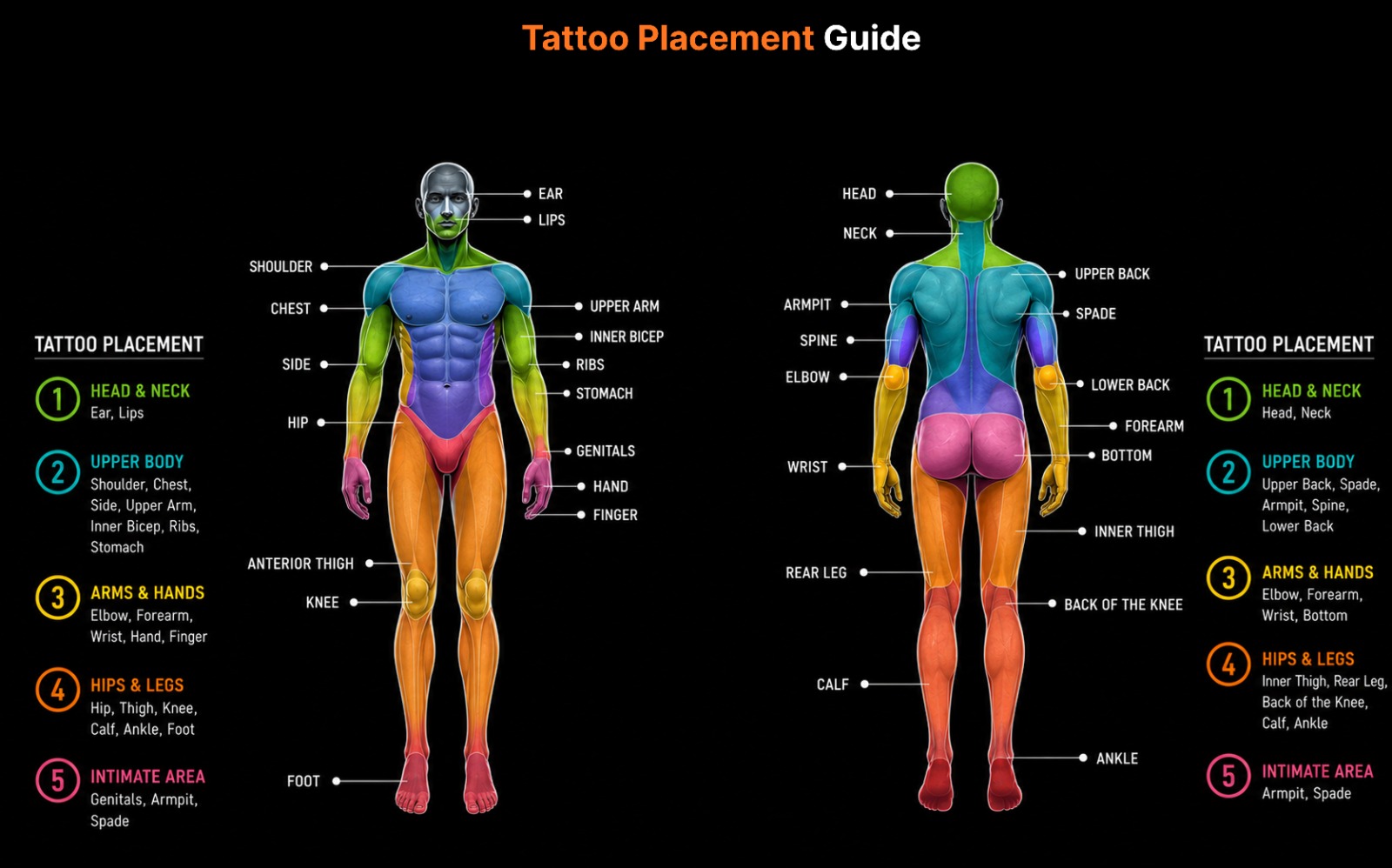
Tattoo placement shapes how a design looks, ages, feels during the session, and fits into daily life. Design selection matters, yet tattoo placement determines visibility, pain level, design flow, and long-term skin movement across different body zones. First-time clients often focus on pain or concealment, while experienced collectors usually plan tattoo locations around sleeves, body symmetry, or future expansion.
This guide covers the most popular tattoo spots across male and female bodies, including arms, chest, ribs, legs, hands, neck, and back placements. The guide explains how small, medium, large, and extra large tattoo placement affects readability, detail retention, and body flow. Pain level differences between fleshy and bony areas are covered throughout each section.
The guide includes placement tips, visibility considerations, aging expectations, and size recommendations for every major body zone. Each placement section explains which designs fit best, how tattoos follow muscle or bone structure, and which areas require more touch-ups over time.
Refer to the placement chart below for a full visual breakdown.
What Are the Different Tattoo Placements on the Body?
Tattoo placements include arm, wrist, hand, neck, chest, rib, shoulder, back, hip, thigh, calf, ankle, and foot tattoo spots. Placement choices vary based on body shape, tattoo visibility, skin texture, long-term aging, and the tattoo artist's recommendation for design flow. Flat surfaces usually hold detail better than highly curved or high-movement areas. Some tattoo spots support large-scale illustrative work, while smaller placements suit symbols, scripts, or minimalist line work. Pain level changes significantly between fleshy and bony areas. Design orientation changes based on muscle direction, spine alignment, and body symmetry. Here's a definitive breakdown of every major tattoo placement on the body.
| Placement Area | Best Tattoo Size | Pain Level |
|---|---|---|
| Forearm | Small to large | Low to medium |
| Upper Arm | Medium to large | Low |
| Bicep | Small to medium | Low to medium |
| Wrist | Small | Medium to high |
| Hand & Finger | Small to medium | High |
| Neck | Small to medium | High |
| Chest & Sternum | Medium to extra large | Medium to high |
| Rib | Medium to large | Very high |
| Shoulder | Medium to large | Low to medium |
| Back | Medium to extra large | Low to medium |
| Hip | Medium to large | Medium to high |
| Thigh | Medium to extra large | Low to medium |
| Calf & Knee | Small to large | Low to high |
| Ankle & Foot | Small to medium | High |
Arm Tattoo Placement
Forearm Tattoo Placement
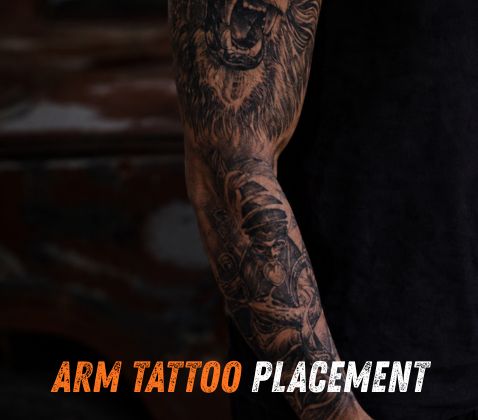
Forearm tattoo placement covers the inner and outer lower arm between the wrist and elbow. The forearm provides a flat, wide surface that supports small, medium, and large tattoo designs, including scripts, botanical work, blackwork, geometric patterns, and portrait pieces. Inner forearm tattoos appear softer and more personal, while outer forearm tattoos create stronger visibility. Medium and large vertical designs usually fit best on the forearm because the shape naturally follows the arm's length. Wrap-around designs work well for bands or continuous illustrative concepts. Tattoo artists often align the design with the forearm muscle direction to prevent distortion when the arm rotates. Forearm tattoo pain ranges from low to medium. Inner forearm skin contains more fat and feels more tolerable. Outer forearm placement feels sharper near the radius and ulna bones.
Upper Arm Tattoo Placement
Upper arm tattoo placement sits between the shoulder and elbow across the tricep and outer upper arm. The upper arm supports medium to large tattoo work due to its broad surface and stable skin texture. Portraits, Japanese-style designs, animals, tribal work, and sleeve foundations commonly start here. Large circular or vertical compositions fit naturally across the upper arm because the area maintains shape consistency over time. Tattoo artists usually place major focal points on the outer arm where the design remains most visible. Sleeve projects frequently begin at the shoulder and extend downward through the upper arm. Upper arm tattoo pain remains low across most outer areas. Thick muscle and extra fat create cushioning that reduces sharp vibration from the tattoo machine. Beginner clients often choose this placement for their first tattoos.
Bicep Tattoo Placement
Bicep tattoo placement covers the front and inner upper arm. Medium tattoo designs fit best on the bicep because the curved muscle supports focused artwork without requiring full sleeve coverage. Animal heads, scripts, symbols, and compact illustrative work commonly appear in this placement. Outer bicep tattoos maintain cleaner visibility during natural arm movement. Inner bicep tattoos appear more private and intimate due to lower visibility. Tattoo artists usually account for muscle flexing when placing symmetrical or highly detailed designs across the bicep. Outer bicep tattoo pain ranges from low to medium because the muscle provides cushioning. Inner bicep placement feels more sensitive due to thinner skin and nerve concentration near the body.
Wrist Tattoo Placement
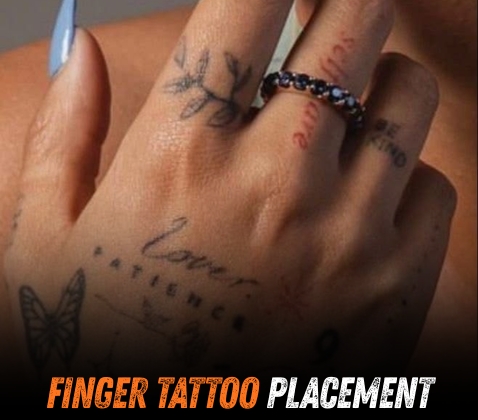
Wrist tattoo placement creates a highly visible and personal tattoo location suited for minimalist artwork. Inner wrist tattoos appear softer and more discreet, while outer wrist tattoos remain visible during daily movement. Scripts, symbols, initials, florals, and fine-line art works best due to the wrist's limited surface area. Small tattoo placement works best on the wrist because thin skin and narrow spacing reduce long-term readability for detailed designs. Horizontal scripts usually follow the wrist line naturally. Tiny vertical symbols fit cleanly along the inner wrist tendon. Wrist tattoos fade faster than many other tattoo spots due to sun exposure, watch friction, and constant skin movement. Touch-ups become common over several years, especially for fine-line work. Wrist tattoo pain ranges from medium to high. Thin skin sits directly over tendons and bone. Inner wrist placement feels more sensitive due to concentrated nerve endings.
Hand & Finger Tattoo Placement
Hand Tattoo Placement
Hand tattoo placement creates one of the boldest and most visible tattoo locations on the body. The back of the hand supports small to medium tattoo designs, including symbols, mandalas, lettering, geometric work, and ornamental patterns. Palm tattoos remain uncommon because thick skin and rapid skin turnover reduce ink retention. Medium tattoo placement works on the back of the hand because the surface supports moderate detail without severe distortion. Palm tattoo placement works poorly for longevity and usually fades unevenly. Hand tattoo pain remains high due to thin skin, exposed tendons, and minimal fat cushioning. The vibration around knuckles and bones creates sharper discomfort than fleshy areas.
Finger Tattoo Placement
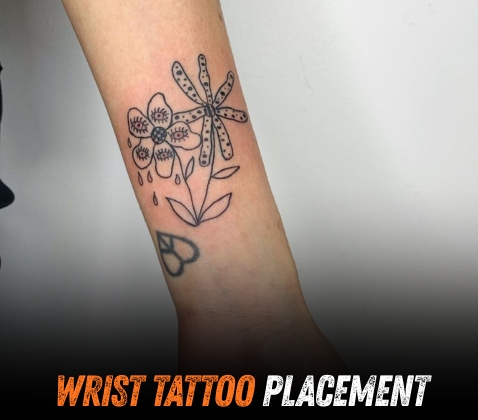
Finger tattoo placement supports tiny symbols, ring tattoos, initials, and single-word scripts. Small tattoo placement remains the only practical size category for fingers due to limited space and constant movement. Finger tattoos blur and fade faster than most placements because the skin regenerates rapidly and experiences repeated friction from hand use. Side-finger tattoos fade especially quickly. Finger tattoo pain remains high due to direct contact with bone and concentrated nerve endings around the knuckles. Professional visibility matters with finger tattoos because some industries still maintain conservative workplace appearance standards.
Neck Tattoo Placement
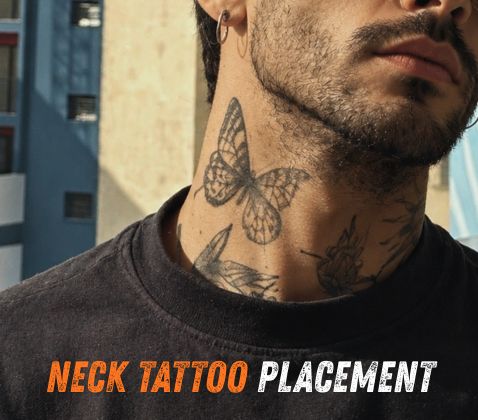
Neck tattoo placement creates a highly visible statement placement connected strongly to tattoo culture. Side neck tattoos support medium designs such as florals, scripts, snakes, or ornamental line work. Visibility remains high from almost every angle. Side neck tattoo pain stays high due to thin skin and nerve concentration. Back of neck tattoos support small to medium geometric, symbolic, or vertical designs. Hair coverage allows partial concealment when desired. Back neck tattoo pain ranges from medium to high because the skin sits close to the cervical spine. Front neck and throat tattoo placement creates extreme visibility and long-term commitment. Small to medium symmetrical work fits best here. Front neck tattoo pain remains high due to nerve clusters, muscle movement, and proximity to the throat. Neck tattoos require periodic touch-ups because the skin stretches and moves frequently.
Chest & Sternum Tattoo Placement
Chest Tattoo Placement
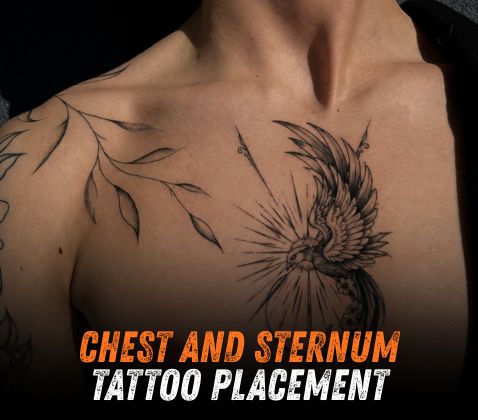
Chest tattoo placement provides a broad surface for medium, large, and extra large tattoo work. Full chest designs commonly spread across both pecs with symmetrical compositions. Single-side chest tattoos create strong focal-point placement without covering the entire torso. Male clients often choose chest placement for portraits, illustrative blackwork, Japanese motifs, and large lettering. Female clients frequently choose side chest or half-chest placement for florals, ornamental work, or fine-line designs. Medium and large tattoo placement fit best on the chest because the flat surface supports high detail and strong symmetry. Horizontal layouts usually complement the chest structure naturally. Chest tattoo pain ranges from medium to high. Fleshy pectoral areas feel more manageable, while collarbone and sternum-adjacent areas feel significantly sharper.
Sternum Tattoo Placement
Sternum tattoo placement runs vertically along the breastbone between the chest and upper stomach. Long ornamental, botanical, geometric, and mandala-based designs fit especially well because the placement follows the body's center line. Medium tattoo placement works best for sternum tattoos because narrow vertical compositions maintain symmetry cleanly. Tattoo artists usually taper or widen the design based on ribcage shape and torso proportions. Sternum tattoo pain remains high because the skin sits directly over bone with very little fat cushioning. Machine vibration across the breastbone creates intense sensitivity for many clients.
Rib Tattoo Placement
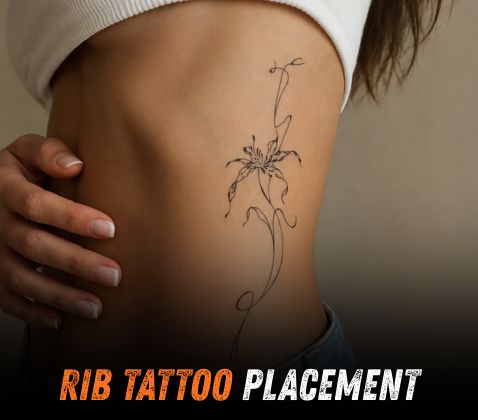
Rib tattoo placement creates one of the most visually striking tattoo locations on the body. Medium and large tattoo placement work best because the ribcage supports long vertical artwork, including scripts, botanical designs, serpents, and fine-line illustration. Tattoo artists usually align rib tattoos with the body's natural curvature to reduce visual distortion. Horizontal layouts often appear warped across the torso during movement. Breathing affects the tattoo process because the skin expands and contracts continuously during each session. Rib tattoo pain remains very high due to minimal muscle coverage and direct proximity to bone. The ribs rank among the most painful tattoo locations on the body. Weight fluctuations and pregnancy may stretch rib tattoos over time, especially across the lower side rib area.
Shoulder Tattoo Placement
Top Shoulder Tattoo Placement
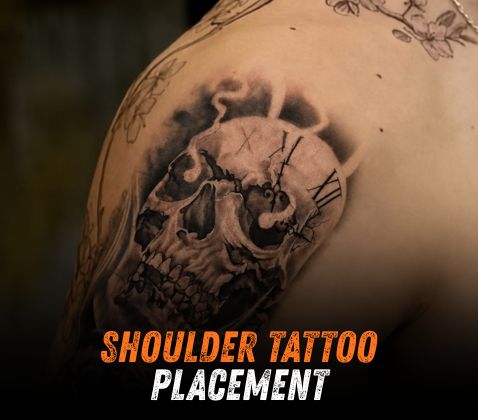
Top shoulder tattoo placement covers the rounded shoulder cap above the upper arm. Medium and large circular compositions fit naturally here, including mandalas, sun motifs, florals, and geometric work. The shoulder cap follows a rounded muscle structure that supports balanced symmetry and sleeve transitions. Many sleeve tattoos begin from the shoulder cap and extend through the upper arm. Top shoulder tattoo pain ranges from low to medium due to moderate muscle cushioning.
Shoulder Blade Tattoo Placement
Shoulder blade tattoo placement creates a large flat canvas across the upper back. Large and extra large tattoo placement works especially well for illustrative pieces, winged compositions, blackwork, and connected back designs. The shoulder blade provides strong detail retention due to stable skin texture and lower sun exposure. Large symmetrical designs often centre between both shoulder blades. Shoulder blade tattoo pain ranges from low to medium. Areas directly above the bone feel sharper than the surrounding muscular upper back.
Front Shoulder Tattoo Placement
Front shoulder tattoo placement sits across the deltoid and upper chest junction. Small and medium tattoo placement works well for geometric symbols, tribal-inspired patterns, and compact illustrative pieces. Front shoulder tattoo pain remains low because thick muscle reduces vibration intensity. Overall, shoulder tattoo placement remains one of the most beginner-friendly tattoo spots on the body.
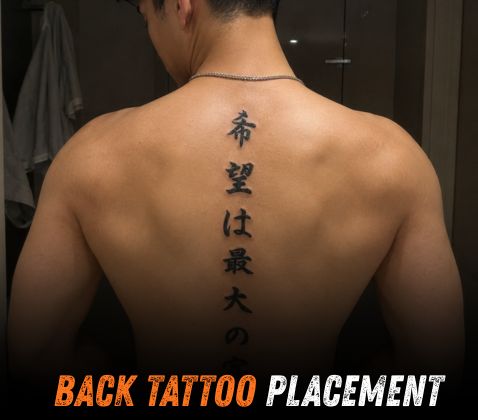
Back Tattoo Placement
Upper Back Tattoo Placement
Upper back tattoo placement spans the area between and below the shoulder blades. Medium and large symmetrical designs fit naturally due to the back's broad and balanced structure. Upper back tattoo pain ranges from low to medium. Muscle-heavy areas feel more manageable than spine-adjacent zones.
Lower Back Tattoo Placement
Lower back tattoo placement traditionally featured horizontal banner-style designs. Modern lower back tattoos increasingly include fine-line botanicals, ornamental work, and symmetrical geometric patterns. Medium tattoo placement works best because the area supports horizontal flow cleanly. Spine-adjacent zones feel more sensitive than the outer lower back. Lower back tattoo pain remains medium overall. Epidural procedures may temporarily affect lower back tattoos during pregnancy-related medical care.
Full Back Piece Tattoo Placement
Full back tattoo placement creates the largest tattoo canvas on the human body. Extra large tattoo placement supports Japanese irezumi, large-scale blackwork, fantasy illustration, and connected narrative compositions. Full back pieces require multiple long tattoo sessions and detailed placement planning. Tattoo artists usually map the design around spine symmetry, shoulder alignment, and muscle structure before tattooing begins. Back tattoo pain varies across different sections. Shoulder blades and spine zones feel significantly sharper than fleshy lower back areas.
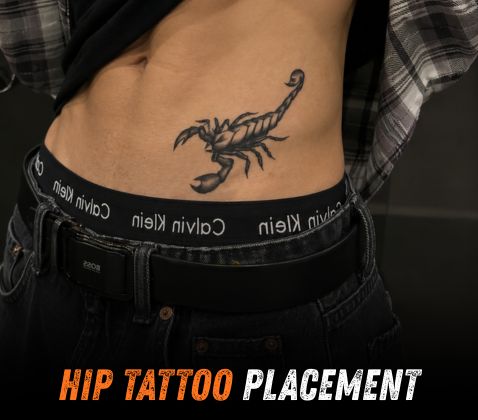
Hip Tattoo Placement
Hip tattoo placement creates a semi-private and highly aesthetic tattoo location popular across both female and male clients. Hip bone placement wraps over the iliac crest and supports medium to large flowing designs, including florals, waves, snakes, and abstract line work. Side hip placement contains softer tissue and feels more manageable during tattooing. Medium tattoo placement works especially well here because the design can follow the body's curve naturally. Hip tattoos may stretch over time due to weight fluctuations and pregnancy. Tattoo artists often sketch hip placement directly on the body before finalizing orientation. Hip tattoo pain ranges from medium to high. Sharp hip bone areas feel significantly more intense than fleshy side hip placement.
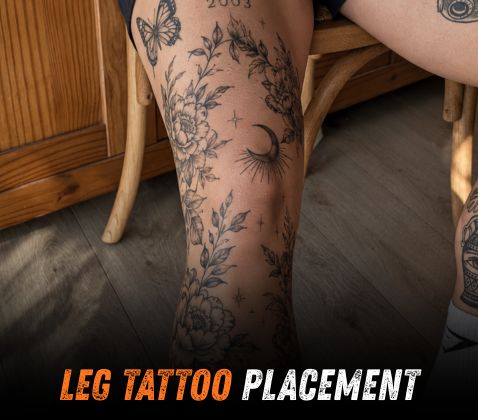
Leg Tattoo Placement
Leg tattoo placement includes the thigh, calf, knee, shin, ankle, and foot. Each section supports different tattoo sizes, pain levels, and design orientations. The leg works well for standalone tattoos and connected leg sleeve concepts. Large surfaces, such as the outer thigh and calf, support detailed illustrative work, while smaller zones, such as the ankle or knee, suit compact designs. Pain level changes significantly between muscular areas and bony structures. The sections below break down the most popular leg tattoo placements.
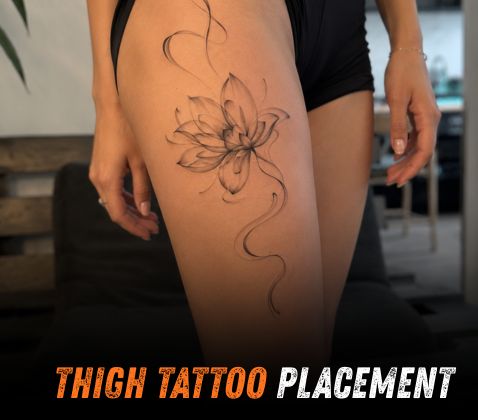
Thigh Tattoo Placement
Outer thigh tattoo placement provides one of the best large-scale tattoo canvases for first-time clients. The flat surface supports portraits, illustrative blackwork, botanical compositions, and detailed realism. Inner thigh tattoo placement feels more intimate and private due to reduced visibility. Soft skin and proximity to the groin increase sensitivity significantly compared to the outer thigh. Front thigh tattoo placement supports medium and large vertical artwork visible in shorts or skirts. Medium to extra large tattoo placement works especially well across the thigh because the area supports strong detail retention. Thigh tattoos remain easy to conceal under clothing while remaining easy to display intentionally. Outer thigh tattoo pain remains low. Inner thigh pain ranges from medium to high due to softer skin and nerve concentration.
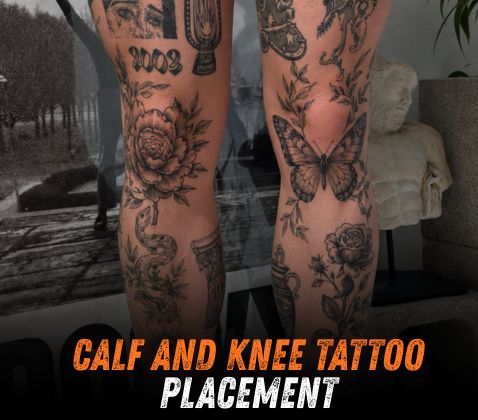
Calf & Knee Tattoo Placement
Calf Tattoo Placement
Calf tattoo placement supports wrap-around and vertically oriented tattoo designs due to the cylindrical muscle shape. Medium and large tattoo placement work especially well for Japanese motifs, animals, blackwork, and illustrative compositions viewed from the back. Calf tattoo pain ranges from low to medium because thick muscle cushions the tattoo process effectively. Shin-adjacent placement feels significantly more painful due to direct bone proximity.
Knee Tattoo Placement
Kneecap tattoo placement supports bold circular designs such as mandalas, webs, or symmetrical geometric patterns. Small and medium tattoo placement work best because the joint bends continuously. Kneecap tattoo pain remains high due to thin skin over bone. Back-of-knee ditch placement feels extremely painful because concentrated nerves and thin skin increase sensitivity dramatically. Knee ditch tattoo placement rarely suits first-time clients due to the intense pain level.
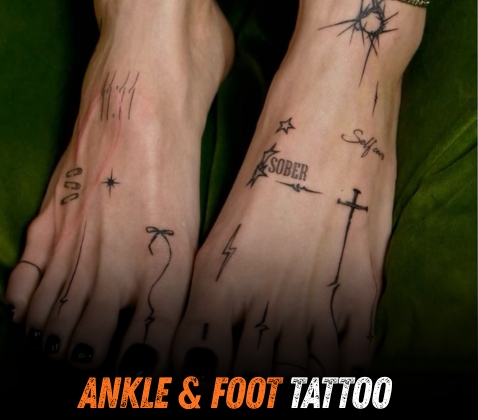
Ankle & Foot Tattoo Placement
Ankle Tattoo Placement
Ankle tattoo placement remains one of the most searched tattoo locations due to its balance of visibility and subtlety. Small and medium tattoo placement fits best for scripts, florals, initials, and minimalist symbols. Inner ankle placement feels slightly more sensitive than outer ankle placement due to thinner skin and nerve concentration. Friction from socks, shoes, and movement increases fading risk over time. Ankle tattoo pain ranges from medium to high due to thin skin and bone proximity. Achilles-adjacent placement feels especially sharp.
Foot Tattoo Placement
Top-of-foot tattoo placement supports small designs visible in sandals or open footwear. Small tattoo placement works best because the foot contains limited stable skin for detailed artwork. Sole tattoo placement fades rapidly due to constant friction and high skin-cell turnover. Most tattoo artists discourage sole tattoos for longevity reasons. Foot tattoo pain remains high because dense nerves, thin skin, and exposed bones increase discomfort. Healing often progresses slowly due to walking pressure and footwear friction.
How to Plan Tattoo Placement
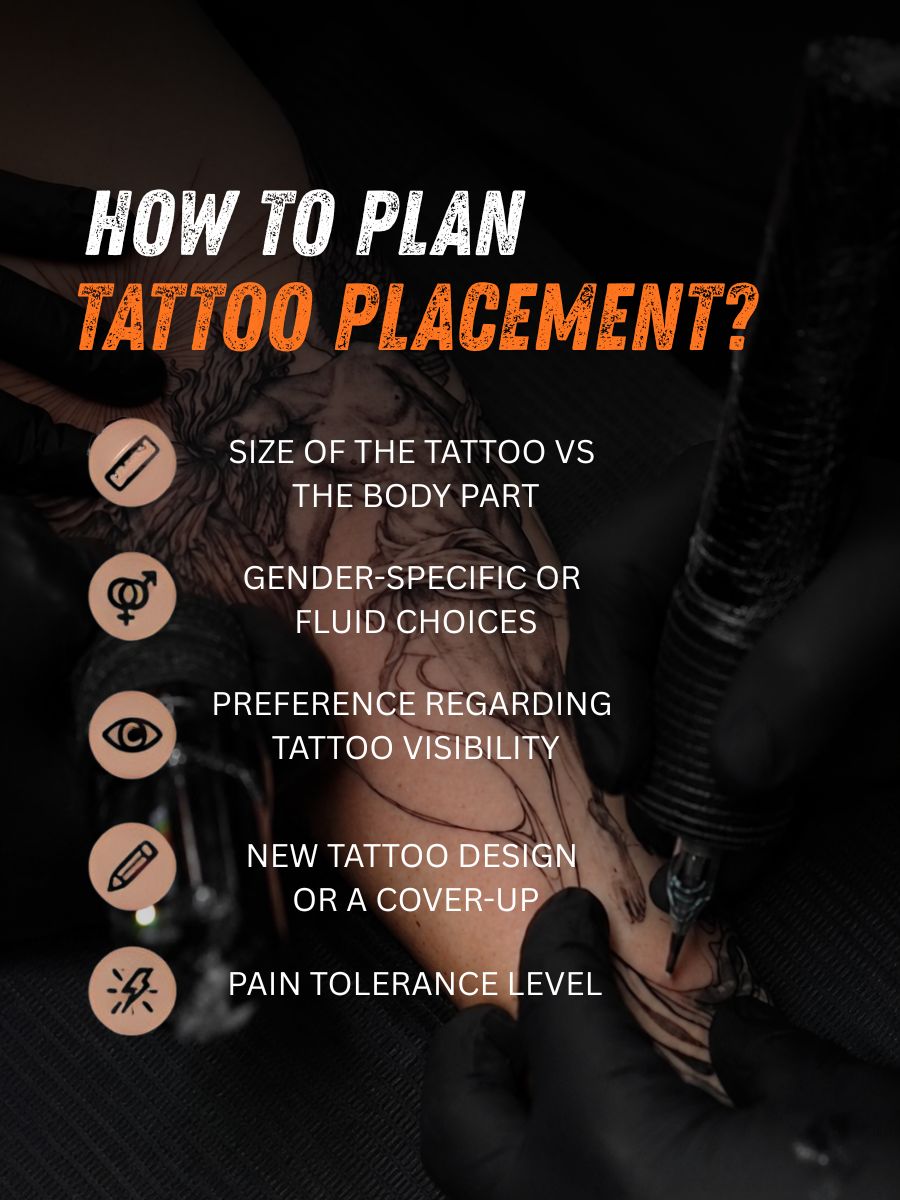
Tattoo placement planning affects design readability, pain management, concealment, long-term ageing, and future tattoo expansion. Strong placement decisions balance body proportions, visibility preferences, and realistic healing expectations. The factors below help narrow down the best tattoo placement for different lifestyles, body types, and tattoo goals.
Visible tattoo placements, such as the hand, neck, and forearm, create stronger public visibility. Concealable placements such as the thigh, rib, and back provide greater flexibility for work environments and formal settings.
Pain level changes significantly between fleshy and bony areas. Outer thigh, upper arm, and calf placement usually feel manageable for first tattoos. Ribs, sternum, hands, and knee ditch placement create much higher discomfort.
Design size should guide placement selection. Large illustrative work requires broad flat surfaces such as the back, chest, thigh, or calf. Small minimalist designs fit better on the wrist, ankle, finger, or behind the ear.
Thin skin, high movement, and repeated sun exposure increase fading speed. Hands, feet, wrists, and fingers usually require more touch-ups. Upper arm, outer thigh, and upper back placement hold detail longer.
Tattoo designs should follow the body's natural lines and muscle direction. Curved placements such as the hip, rib, and shoulder require strategic orientation to prevent distortion.
Neck, hand, and finger tattoos remain highly visible in professional environments. Placement choices may affect clothing flexibility, sun exposure, gym routines, and long-term tattoo maintenance.
What Are the Best Tattoo Placements According to Size?
Tattoo size directly affects placement quality, readability, and long-term detail retention. Small tattoos fit compact and low-detail zones, while large and extra large tattoo placement requires broad surfaces with stable skin texture. The sections below break down the best tattoo locations based on tattoo size categories.
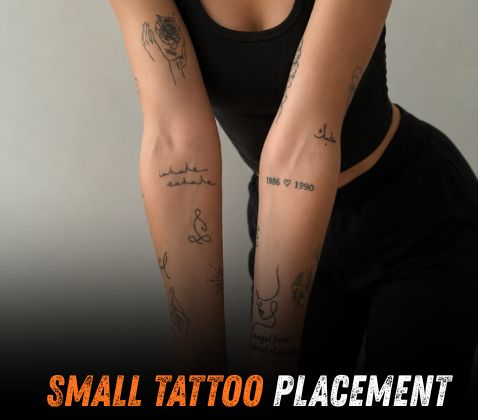
Small Tattoo Placement
small tattoos usually measure between 2 and 4 inches. Small tattoo placement works best in compact areas where minimal detail remains readable over time.
- Wrist: Supports delicate scripts, tiny symbols, and fine-line florals.
- Ankle: Fits initials, icons, and minimalist artwork cleanly.
- Behind the Ear: Creates a subtle placement for stars, symbols, and micro botanicals.
- Finger: Supports ring tattoos and initials, but fades quickly.
- Collarbone: Provides a clean horizontal placement for words and simple line work.
- Inner Wrist: Balances visibility with personal symbolism.
- Nape of Neck: Allows discreet placement, often hidden by hair.
Small tattoos placed on high-friction zones such as fingers and feet usually require more frequent touch-ups.
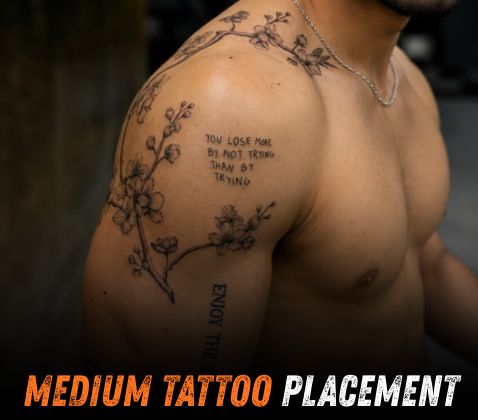
Medium Tattoo Placement
Medium tattoos usually measure between 4 and 6 inches. Medium tattoo placement balances detail retention, visibility, and body flexibility across multiple body zones.
- Forearm: Holds detailed scripts, blackwork, and illustrative designs effectively.
- Bicep & Upper Arm: Supports portraits, animals, and medium-scale artwork.
- Calf: Fits vertical and wrap-around compositions naturally.
- Shoulder Cap: Supports circular and symmetrical layouts.
- Single-Side Chest: Provides room for detailed statement pieces.
- Outer Thigh: Combines low pain with strong detail retention.
- Back of Neck: Works well for geometric and symmetrical compositions.
Medium tattoo placement offers one of the most versatile size categories across the body.
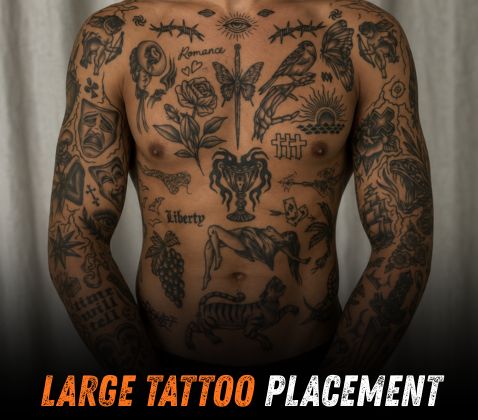
Large Tattoo Placement
Large tattoos usually measure between 6 and 9 inches. Large tattoo placement requires broad surfaces that support detail, symmetry, and long-term readability.
- Back: Supports expansive, illustrative and symmetrical compositions.
- Outer Thigh: Provides space for large botanical and realism work.
- Ribcage: Fits elongated vertical artwork naturally.
- Full Chest: Supports symmetrical designs spanning both pecs.
- Shoulder Into Upper Arm: Creates a strong sleeve foundation.
- Calf Wrap-Around: Allows continuous flowing artwork around the leg.
Large tattoos usually require multiple sessions and experienced tattoo artists familiar with large-scale composition planning.
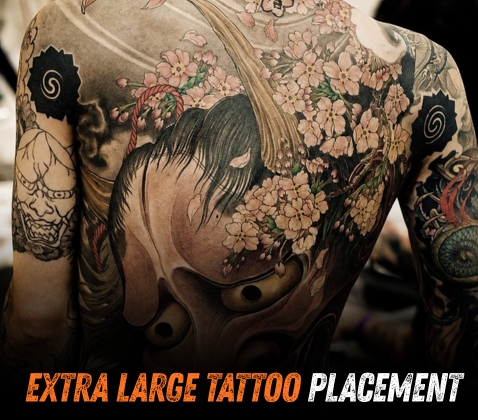
Extra Large Tattoo Placement
Extra large tattoos usually exceed 9 inches and commonly require 3 or more tattoo sessions. Extra large tattoo placement supports connected large-scale concepts rather than isolated artwork.
- Full Back: Supports Japanese irezumi, portraits, and narrative illustration.
- Full Sleeve: Extends from the shoulder to the wrist with planned sectional flow.
- Leg Sleeve: Connects thigh, calf, knee, and ankle into one composition.
- Full Chest: Spans both pecs and sometimes extends toward the stomach.
- Body Suit Sections: Connect multiple tattoo zones into a unified visual concept.
Extra large tattoo work requires specialist artists experienced in session planning, body mapping, and large-scale aftercare management.

What Are the Best Tattoo Placement Ideas for Women?
Tattoo placement ideas for women often prioritize elegant flow, concealment flexibility, and body-contouring design orientation. Many placements follow natural curves across the hip, sternum, spine, rib, and shoulder.
Behind-the-ear, inner wrist, and collarbone tattoo placement work especially well for first tattoos. These placements support delicate symbols, scripts, and minimalist line work.
Outer thigh, upper arm, and shoulder blade tattoo placement support florals, portraits, ornamental work, and medium-scale illustration. These areas balance comfort with strong detail retention.
Ankle, side hip, and forearm tattoo placement create visible yet adaptable tattoo locations. These placements suit scripts, florals, snakes, and fine-line illustration.
Sternum, rib, and spine tattoo placement remain highly searched despite elevated pain levels. The body-contouring effect and strong visual symmetry drive continued popularity.
Neck and hand tattoo placement create strong visibility and bold aesthetics. Professional visibility and long-term commitment remain important considerations. Placements that follow natural body curves often create the strongest visual impact across female anatomy.

What Are the Best Tattoo Placement Ideas for Men?
Tattoo placement ideas for men often emphasize muscle visibility, large-scale compositions, and connected sleeve concepts. Many male clients choose placements that highlight shoulder width, arm structure, chest symmetry, or calf definition.
Outer forearm, upper arm, and calf tattoo placement work especially well for first tattoos. These placements support strong visibility with manageable pain levels.
Outer thigh, back, and shoulder tattoo placement support large illustrative, geometric, and Japanese-style compositions. Broad surfaces improve detail retention and body flow.
Chest, shoulder blade, and lower leg tattoo placement create balanced visibility with strong design flexibility. These placements support realism, blackwork, and symmetrical layouts.
Rib, hand, neck, and spine tattoo placement create bold visual impact and strong commitment. These placements remain increasingly mainstream among experienced tattoo collectors. Arm sleeves and leg sleeves remain especially popular among male collectors. Sleeve planning requires theme consistency, connective filler design, and long-term placement mapping.
What Are the Most Painful Tattoo Placements?
Tattoo pain increases in areas with thin skin, concentrated nerves, minimal fat, and direct bone proximity. Bony areas and high-movement joints usually create stronger discomfort than muscular body zones.
Extremely High Pain Tattoo Placements
- Ribs
- Sternum
- Spine
- Knee ditch
- Inner elbow ditch
- Armpit
These placements contain minimal cushioning and intense nerve concentration.
High Pain Tattoo Placements
- Hands and fingers
- Feet and ankles
- Front neck and throat
- Head and face
- Shin
Thin skin and exposed bone increase vibration intensity in these placements.
Medium Pain Tattoo Placements
- Inner thigh
- Inner wrist
- Upper chest near the collarbone
- Lower back near the spine
Pain levels vary significantly based on individual tolerance and tattoo duration.
Low Pain Tattoo Placements
- Outer thigh
- Upper arm
- Shoulder cap
- Calf
- Upper back away from the spine
- Outer forearm
Muscle-heavy placements usually feel more manageable during long sessions.
Refer to the tattoo pain chart below for a full visual breakdown of pain levels by body zone.

Where to Get Tattoos in Brampton?
Brampton continues to grow as a major tattoo destination within the Greater Toronto Area. The city includes studios specializing in fine-line tattoos, blackwork, South Asian-inspired designs, realism, ornamental work, and traditional tattooing. Hardwork Tattoos in Brampton, ON, remains one of the most recognized local studios for custom tattoo work and placement-focused consultations. Clients commonly book consultations before committing to large-scale projects, sleeves, sternum placement, or body-contouring designs.
Tattoo placement planning becomes especially important for rib, hip, neck, and sleeve work because body flow and symmetry affect the final appearance significantly. Booking a consultation before a walk-in session gives the artist time to map sizing, orientation, and long-term placement flow. Brampton's tattoo community continues expanding across multiple styles and experience levels, giving clients access to both custom large-scale work and smaller minimalist tattoo placement projects.
Frequently Asked Questions
Upper arm, outer thigh, forearm, and calf tattoos usually create the lowest pain levels due to thicker skin and muscle coverage.
Rib, sternum, ankle, neck, and finger tattoos usually create the highest pain levels due to thin skin and nerve concentration.
Hand, finger, wrist, and neck tattoos usually fade faster due to frequent washing, friction, and UV exposure.
Back, chest, thigh, and upper arm placements support large tattoos due to wider surface area and balanced body flow.
Upper arm, outer thigh, and calf tattoos usually heal faster due to lower friction and thicker skin coverage.